Horrea Galbae, Public warehouse complex near Aventine Hill, Rome, Italy
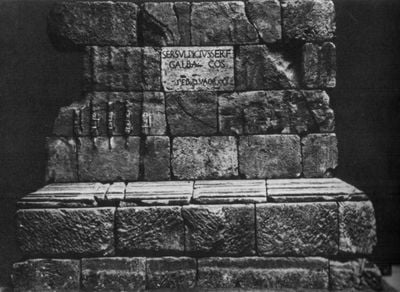
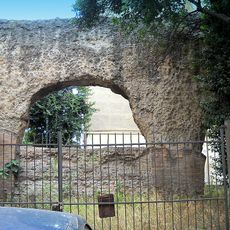
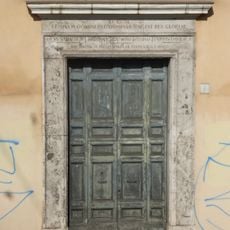
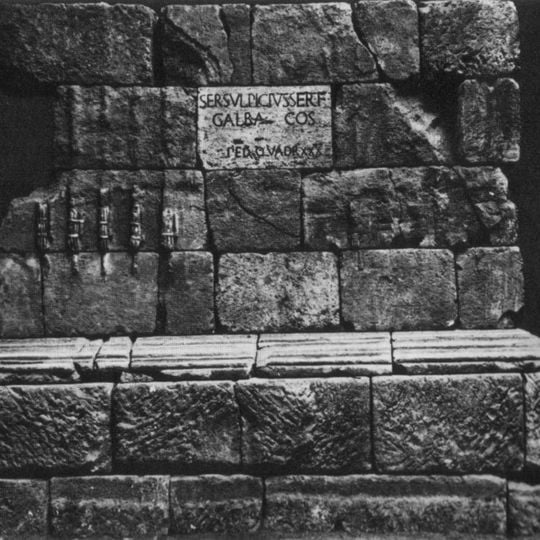
Horrea Galbae is an ancient warehouse complex in southern Rome, between the foot of the Aventine Hill and Monte Testaccio. It was laid out as three parallel rectangular courtyards, each lined with colonnades of tabernae and entered by a single axial gate at one short end. The walls were built in opus reticulatum of tufa, the earliest known use of that technique. A stone plaque in the surviving masonry names Servius Sulpicius Galba and Pedo Claudius.
The complex was built in the late Republic on land belonging to the Sulpicii Galbae family, and it later took the name of Emperor Galba. Over the following centuries it was expanded and rebuilt several times to meet the growing needs of the city.
The long rows of storage rooms give a clear sense of how goods moved through the city on a daily basis, handled by merchants, workers, and traders. Walking along the remains, you can still read the layout of the individual units that once lined the internal corridors.
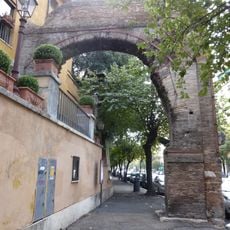
The remains lie between the southern foot of the Aventine and Monte Testaccio, in the Testaccio district, with scattered wall fragments rather than a single enclosed site. Look for the stone plaque inscribed with the names of Servius Sulpicius Galba and Pedo Claudius near the surviving masonry. Ground is uneven where walls reappear between modern buildings, so sturdy shoes help.
One section of the complex was reserved for grain and had a raised floor to keep moisture away from the stored supplies. This kind of functional separation within a single warehouse shows how carefully the Romans planned their storage systems.
The community of curious travelers
AroundUs brings together thousands of curated places, local tips, and hidden gems, enriched daily by 93,658 contributors worldwide.