Ponte Sublicio, Stone bridge in Rome, Italy
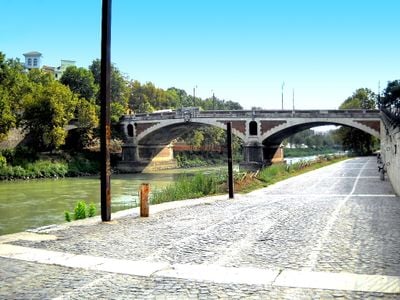
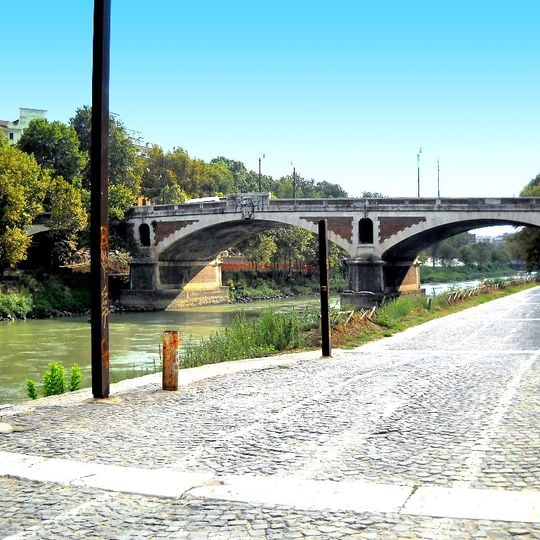
Ponte Sublicio is a stone arch bridge spanning the Tiber River in Rome, connecting the Ripa district with Trastevere. The current structure was built in the early 20th century and measures about 105 meters long and 20 meters wide.
The wooden bridge was attributed by Livy and Dionysius of Halicarnassus to King Ancus Marcius (642–617 BCE); it stood just downstream of Tiber Island at an ancient ford. Rebuilt in 60, 32 and 23 BCE, 5 and 69 CE, under Antoninus Pius and perhaps later emperors, its remains stayed visible in the riverbed until about 1890, when they were demolished during flood-prevention works.
The name comes from the Volscian word sublica, meaning wooden planks, because the ancient bridge was built entirely of wood. On it, during the Lemuria, priests threw the Argei, straw puppets, into the Tiber, perhaps replacing older human sacrifices. Varro linked the title pontifex, pontiff, to pons, bridge.
The bridge carries both pedestrians and vehicle traffic between Piazza dell'Emporio in Ripa and Piazza di Porta Portese in Trastevere, so walk on the sidewalks at the edges. Its three masonry arches, 105 m long and 20 m wide, are best seen from the riverbanks below rather than from the roadway.
The name comes from the Volscian word sublica, meaning "wood planks", not from Latin. The ancient bridge was built entirely of wood, and religious tradition forbade other materials so it could be dismantled quickly for defence.
The community of curious travelers
AroundUs brings together thousands of curated places, local tips, and hidden gems, enriched daily by 93,015 contributors worldwide.