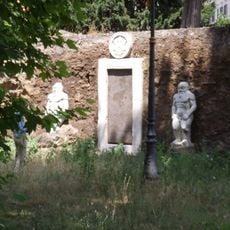
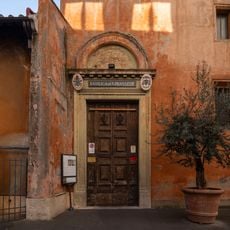
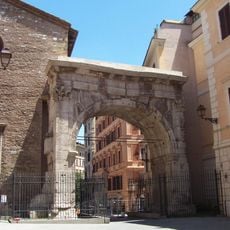
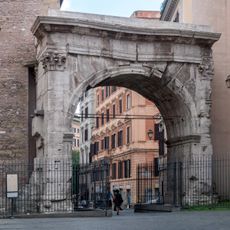
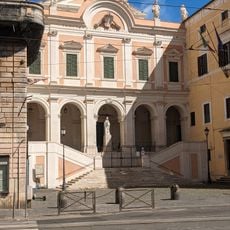
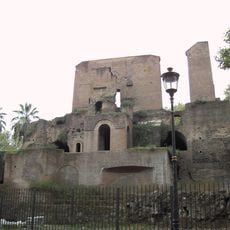
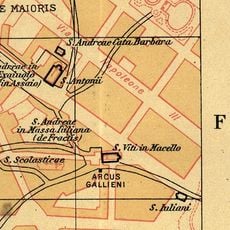
Horti Calyclani, Archaeological site on Esquiline Hill, Rome, Italy.
Horti Calyclani was a private garden estate on the Esquiline Hill, bounded by stone markers that defined its borders. These boundary stones marked the limits between this property and neighboring estates like the Horti Tauriani.
The site was discovered in 1873-74 when boundary stones bearing the inscription 'cippi hi finiunt hortos Calyclanos et Taurianos' were found. A third marker came to light in 1951, showing how archaeological knowledge of this Roman property expanded over time.
The gardens were part of Roman urban life, showing how wealthy residents owned green spaces for private use within the crowded city. Such estates served both practical purposes and provided retreats for their owners.
The boundary stones cannot be seen at the original site, as they are now housed at the Antiquarium Comunale museum on Celio Hill. Visiting the museum is the best way to view these important artifacts from the Roman property.
The three boundary stones show an interesting pattern: two were found close together in 1873, while the third emerged only in 1951. This decades-long gap between discoveries reveals how Roman artifacts can reappear long after initial excavations.
The community of curious travelers
AroundUs brings together thousands of curated places, local tips, and hidden gems, enriched daily by 60,000 contributors worldwide.