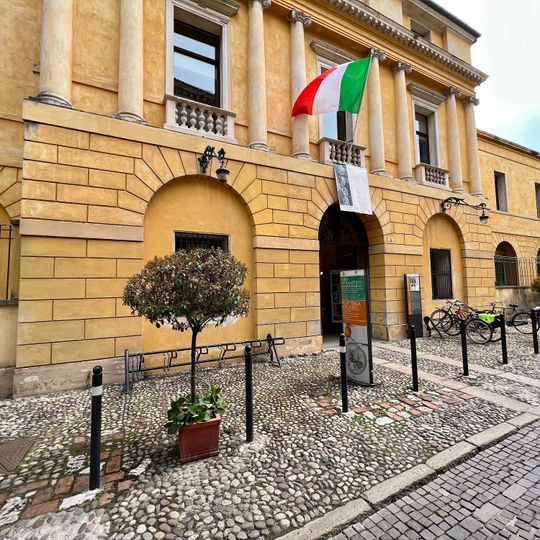
Museo di Santa Corona, Archaeological museum in central Vicenza, Italy
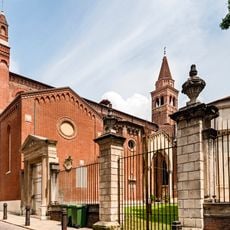
The Museo di Santa Corona opened in 1991 in the former Dominican convent next to the church of Santa Corona. Its first floor holds fossils and stuffed animals from the province of Vicenza, including a fossil palm of the genus Latanides about 42 million years old. The ground floor displays Paleoveneti votive bronzes from a sanctuary of the goddess Reitia and, along the inner courtyard portico, Roman tombstones, milestones and sarcophagi.
The museum formed from collections of objects discovered during archaeological excavations in the region, documenting human settlement from the Paleolithic period through Roman times. Among the pieces are tools from the Fimon Valley and remains from the Roman theater of Berga, showing the long history of the area.
The archaeological section displays votive offerings and inscriptions from local excavation sites that reveal how people in this region lived and believed in ancient times. These objects come from digs around the city and provide clues about daily life and religious practices.
The museum is housed in a historic building complex and is open to visitors on several days each week. Guided tours and educational programs for schools are offered regularly to learn more about local archaeology.
The Roman sculptures donated by Girolamo Egidio di Velo (1792–1831) came from his excavations in Rome in the early 19th century and a subsequent exchange with the Vatican Museums. Among them are a colossal porphyry column fragment, river-god statues, a resting satyr copied from Praxiteles, and a Hellenistic nymph on a rock.
The community of curious travelers
AroundUs brings together thousands of curated places, local tips, and hidden gems, enriched daily by 93,782 contributors worldwide.