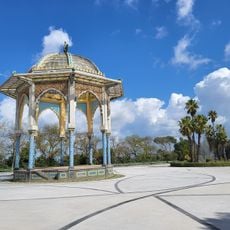
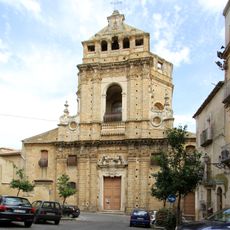
Palike, Archaeological park and museum in Mineo, Italy.
Palike is an archaeological site on a basalt spur above the Margi river valley at Rocchicella, in the comune of Mineo, about 2 km west of Palagonia. Excavations since 1995 by the Catania superintendency uncovered layers from the Mesolithic to the Swabian age; in front of a cave at the foot of the hill lie the remains of the sanctuary of the Palici, rebuilt in the 5th century BCE with porticoes and a banquet hall. An exhibition displays the finds.
The site began around 453 BCE as a settlement and religious center in eastern Sicily. It evolved through centuries of inhabitation before eventual abandonment and later archaeological rediscovery.
The Palici were local deities absorbed into the Greek pantheon; their sanctuary stood on the plain below the hill, and Diodorus Siculus reports that Ducetius refounded the city above it in 453 BCE. The name Palike is linked to these gods, and many historians derive Palagonia's toponym from "Palica Nea", the New Palica. The sanctuary was rebuilt in the 5th century BCE with porticoes and a banquet hall, probably on Ducetius's initiative, who is said to have placed the seat of his league of Sikel cities there.
The site lies at Rocchicella, about 1 km from Palagonia though within the comune of Mineo, on a basalt spur above the Margi valley. The Sicilian Region acquired the area and opened it to the public with an exhibition space for finds from the excavations. Excavation campaigns by the Catania superintendency have run since 1995.
The Palici were twin gods born, in Greek myth, from Zeus and the nymph Thalia, and their sanctuary stood by the mephitic waters of the little lake of Naftia, where priests gave prophecies and staged ordeals. The lake can no longer be seen: its gases are now exploited industrially.
The community of curious travelers
AroundUs brings together thousands of curated places, local tips, and hidden gems, enriched daily by 93,761 contributors worldwide.