Palazzo Ducale, Renaissance palace in Massa, Italy
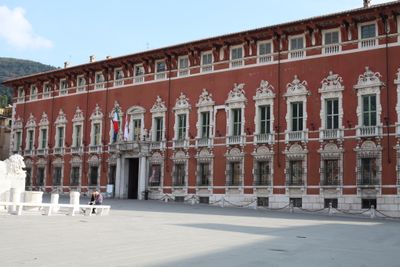
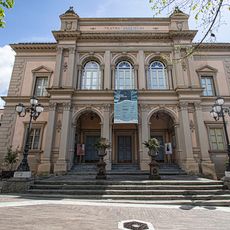
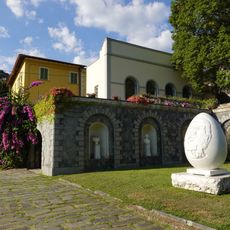
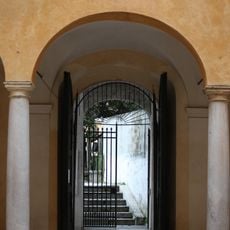
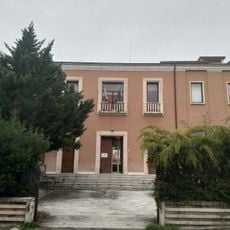
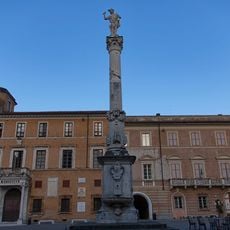
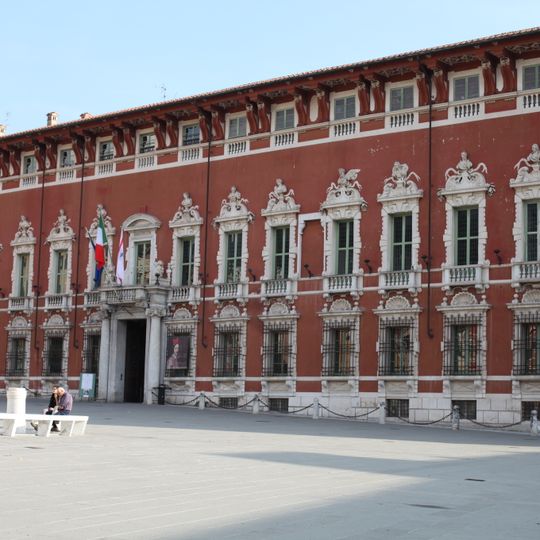
The Palazzo Ducale is a Renaissance palace in Massa featuring red and white marble on its external walls and a central courtyard with columns supporting arcades. The structure showcases ornate marble doorways and currently serves as office space for local government functions.
Alberico I Cybo-Malaspina began the palace in 1563, converting a family villa into the court seat; the first enlargement added a taller wing at right angles toward today's Piazza Aranci. Unsatisfied with the uneven volumes, he had Roman technicians draft a project and signed the contract with notary Filippo Andreoni on 10 February 1568. Teresa Pamphili, wife of Carlo II Cybo-Malaspina, later entrusted architect Alessandro Bergamini with the red and white facades.
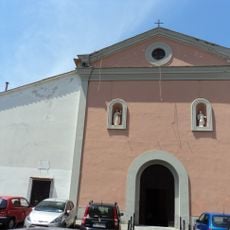
The red and white of the facades are the colours of papal power, brought by Teresa Pamphili, niece of Pope Innocent X, who governed in place of her weak husband Carlo II Cybo-Malaspina. She commissioned the courtyard fountain with the Grotta del Nettuno, the frescoed hall and its marble statues, and the architect Alessandro Bergamini to rework the exteriors.
The building houses government offices today and can be viewed from the outside, with its main facade facing Piazza Aranci. The interior courtyard with its columns and marble details is often visible when walking around the structure.
At the far end of the columned courtyard opens the Grotta del Nettuno, a rococo rockwork chamber where a statue of Neptune rides the waves. The two adjoining rooms were frescoed on their vaults by Stefano Lemmi in 1702 with "Le manifestazioni dell'ingegno umano" and "La glorificazione dei quattro pontefici delle famiglie Cybo e Pamphili".
The community of curious travelers
AroundUs brings together thousands of curated places, local tips, and hidden gems, enriched daily by 94,147 contributors worldwide.