Santa Maria a Lamula, Medieval church in Montelaterone, Italy
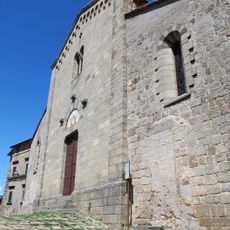
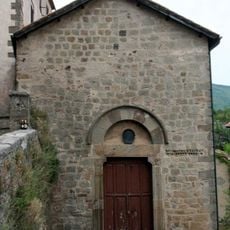
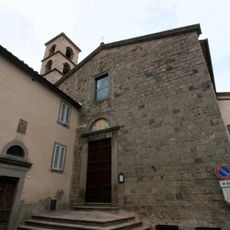
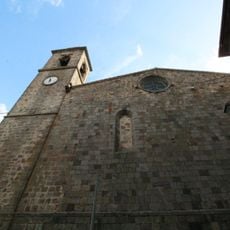
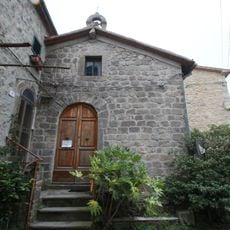
Santa Maria a Lamula is a Romanesque church with a nave and two side aisles ending in three semicircular apses, built of local trachyte blocks and covered by wooden trusses. It was partly rebuilt between 1935 and 1943. An inscription on the first pillar to the right of the entrance records restoration in June 1268.
Santa Maria a Lamula is first documented in 853, when Emperor Lothair II confirmed its ownership to the Abbey of San Salvatore on Monte Amiata, of which it was a dependent cell. A document of 14 September 892 records a market held beside the church. Pope Gregory V recognised it as a baptismal church in 996. In 1264 Sienese troops fighting the Aldobrandeschi burned it; an inscription on the first pillar right of the entrance records its restoration in June 1268, under King Charles I of Anjou.
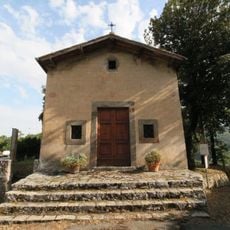
The name Lamula comes from the medieval village of Lamule, also called Lama, meaning a marsh or pond, since the site stood on waterlogged ground. The village has left no visible traces. A local legend tells that a mule knelt before the church portal to honour the statue of the Madonna, and the marks of its knees are still shown on the stone in front of the entrance.
The pieve stands at the foot of the Montelaterone hill in the municipality of Arcidosso, on the road that climbs from the Ente valley toward the village. The site is reached on foot from the surrounding chestnut woods and clay slopes. The building was partly rebuilt between 1935 and 1943, so the Romanesque trachyte masonry seen today mixes original parts with modern work.
A mule knelt before the church portal to honour the statue of the Madonna, and its knee prints are still shown on the stone in front of the entrance. The village that once stood beside the church, Lamule, has left no visible trace.
The community of curious travelers
AroundUs brings together thousands of curated places, local tips, and hidden gems, enriched daily by 93,017 contributors worldwide.