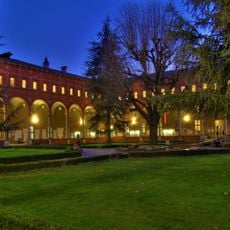
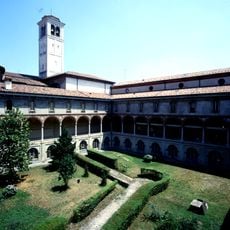
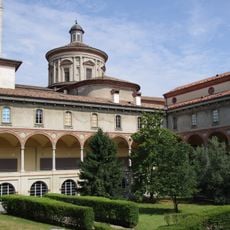
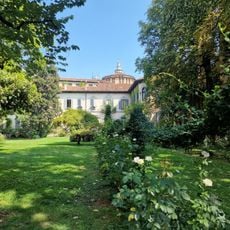
Palazzo Gonzaga di Vescovado, Neo-Romanesque palazzo in Milan, Italy.
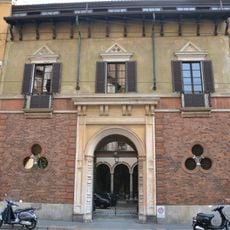
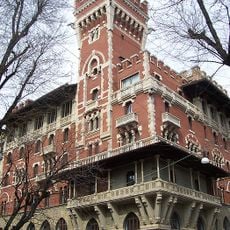
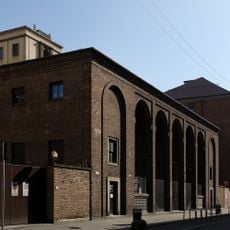
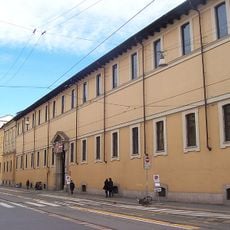
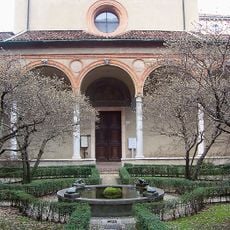
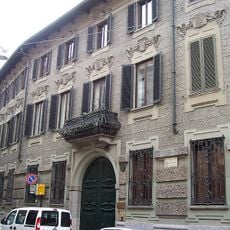
Palazzo Gonzaga di Vescovado is a Neo-Romanesque building on Via Carducci in Milan, constructed from 1897 to 1901 for Prince Emanuele Gonzaga. Its recessed central body is flanked by two wings around a courtyard closed by a wrought-iron gate, rare in Milan. The design uses terracotta brick and inverted balconies, and the entrance with porter's lodge recalls Romanesque church sacelli.
Prince Emanuele Gonzaga commissioned architect Cecilio Arpesani to design this residence, which was built between 1897 and 1901. The palazzo emerged during a period when Milan was rapidly transforming into a modern city.
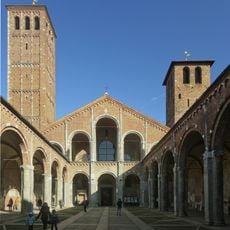
Prince Emanuele Gonzaga asked that the design follow Lombard Neo-Romanesque tradition, close to the forms of the Basilica of Sant'Ambrogio nearby; Milan had marked the fifteenth centenary of Saint Ambrose in May 1897, as construction began. The entrance with its porter's lodge recalls the small chapels of Romanesque churches.
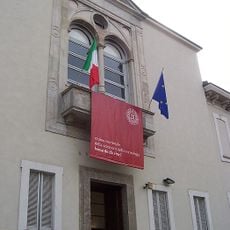
The building now houses several classrooms of the Università Cattolica del Sacro Cuore and is located at Via Carducci 28-30. Its position on this central street makes it easy to reach on foot.
The wrought-iron gate closing the courtyard is described in the sources as rather rare in Milan. The entrance with its porter's lodge recalls the small chapels typical of Romanesque churches, built in terracotta brick.
The community of curious travelers
AroundUs brings together thousands of curated places, local tips, and hidden gems, enriched daily by 92,783 contributors worldwide.