Ponti Rossi, Archaeological site in Naples, Italy
Ponti Rossi is an archaeological site in northern Naples containing preserved Roman structures from ancient times. The remains show portions of a Roman aqueduct system and old walls that are still visible today.
The surviving stretch is a section of the Serino aqueduct built under Augustus in tufa and red brick, later dated by construction technique after lead pipes bearing Claudius's name had led scholars to attribute it to him until 1938. The conduit, 2.10 m high and 0.82 m wide, ran many miles from the Acquara springs near Serino to the Gulf of Naples, with branches to Nola, Pompeii, Pomigliano d'Arco and Atella. It was destroyed after the fall of the empire and rebuilt from the 16th century under Pedro de Toledo, with Antonio Lettieri tracing its course.
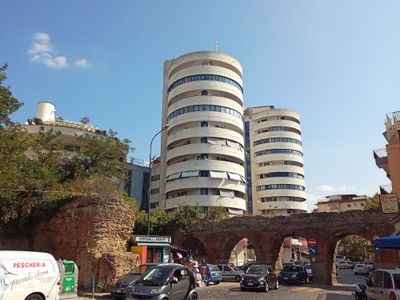
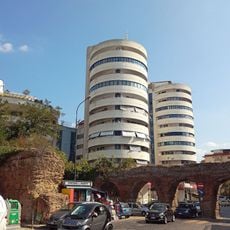
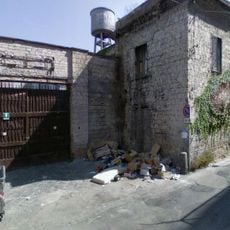
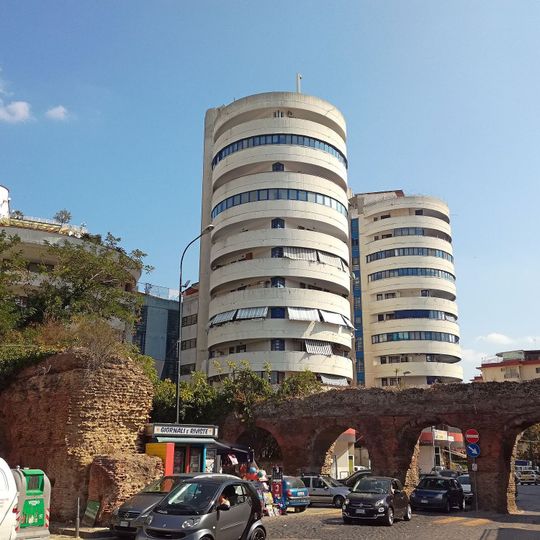
The name Ponti Rossi comes from the red latericium bricks and tufo blocks of the Augustan aqueduct stretch, which still stands at street level behind parked cars. The area was farmland from antiquity, and in the 17th century Cosimo Fanzago built the Santa Maria dei Monti complex on the surrounding hills.
The remains stand at street level along Via Ponti Rossi, in the San Carlo all'Arena district between the Bosco di Capodimonte and Piazza Grande; the brick wall with its arched openings is seen from the roadway, behind parked cars. The zone is also linked to Miano, Secondigliano and Capodichino by Via Udalrigo Masoni.
Until 1938 the aqueduct was attributed to Emperor Claudius because lead pipes bearing his name were found; study of the masonry and construction techniques then moved the date to the reign of Augustus. The red bricks and tufa blocks of that Augustan stretch gave the district its name.
The community of curious travelers
AroundUs brings together thousands of curated places, local tips, and hidden gems, enriched daily by 93,998 contributors worldwide.