Porta Santa Croce, City gate in Padua, Italy
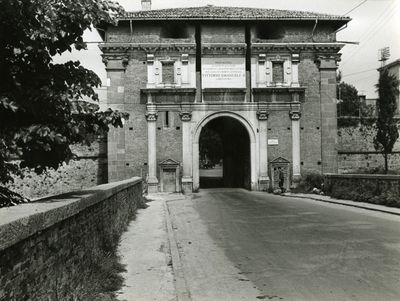
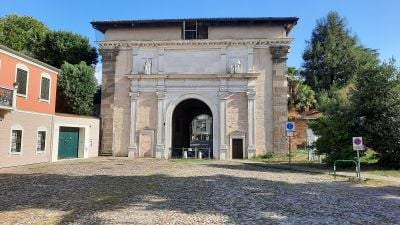
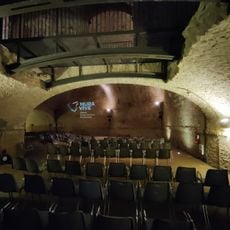
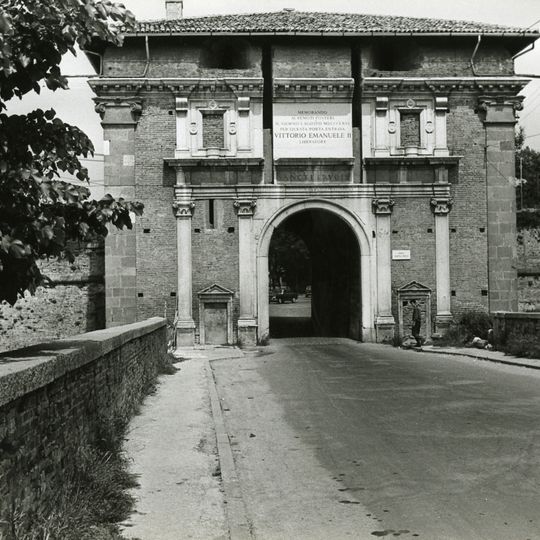
Porta Santa Croce is a Renaissance city gate in the southern section of Padua's old city walls, built in the early 16th century. It takes the form of a Roman triumphal arch with large stone Corinthian pilasters, a roofed terrace above the opening, and a barrel-vaulted interior with brick walls.
The gate was built in 1517 as part of a broader effort to reinforce Padua's defenses during the period of Venetian rule. In 1866, when Padua joined the Kingdom of Italy, King Victor Emmanuel II entered the city through this gate, and a commemorative inscription on the facade marks that moment.
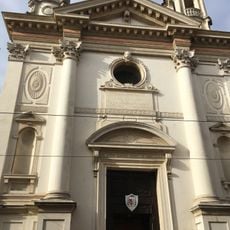
Porta Santa Croce takes its name from the church and neighborhood it faces, a common way of naming city gates in Padua. On the outer facade, stone figures of Saints Prosdocimo and Jerome are still visible, reflecting the religious character of the city.
The gate sits along the southern stretch of the old city walls and is easy to reach on foot from central Padua. Inside, a staircase leads up to the top of the wall, where you can look out over the surrounding area.
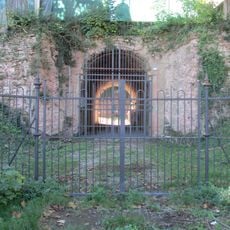
The bridge in front of the gate was once the longest along the entire city wall system, built to connect it to a nearby fort. Today, most of the bridge is buried underground, and only a few of its large arches remain visible from street level.
The community of curious travelers
AroundUs brings together thousands of curated places, local tips, and hidden gems, enriched daily by 92,644 contributors worldwide.