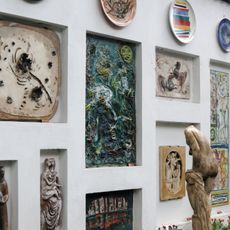
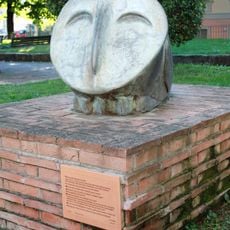
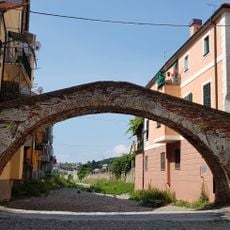
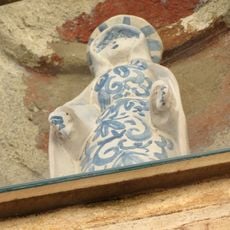
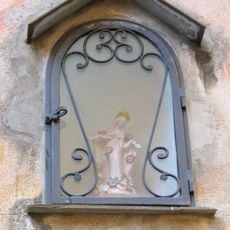
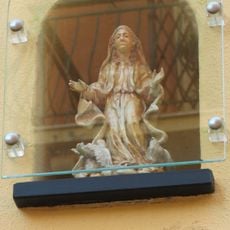
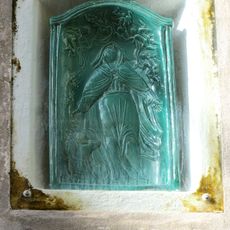
Villa Faraggiana, Private museum in Albissola Marina, Italy.
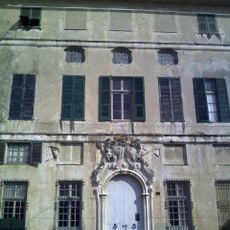
Villa Faraggiana is an 18th-century residence on via Salomoni in Albissola Marina, built for the Durazzo family. Its core, the Palazzo dell'Olmo, was finished in 1735–1736; the garden followed from 1738. Inside, the Galleria delle Stagioni, built in 1750, opens onto the garden through a series of arches and has a polychrome majolica tile floor.
Villa Faraggiana was built from 1717 to 1735 for Eugenio Durazzo and his nephew Gerolamo, with the Palazzo dell'Olmo finished in 1735 and its facade completed in 1736; work on the great garden began in 1738. In 1821 Marcello Durazzo sold the property to the Novara nobles Giuseppe and Gerolamo Faraggiana, who gave it their name. Alessandro Faraggiana bequeathed it to the Comune di Novara in 1961, and it has been open to the public since 1968.
The name comes from the Faraggiana family of Novara, who bought the villa in 1821. The Galleria delle Stagioni, built in 1750 for Marcellino Durazzo, has frescoes of Diana's life, carved sculptures by Filippo Parodi dated 1667, and a majolica tile floor. The private Cappella della Misericordia, dedicated to the Madonna della Misericordia, was originally open to residents of nearby houses.
The villa has belonged to the municipality of Novara since Alessandro Faraggiana's 1961 bequest and has been open to the public for visits and exhibitions since 1968. The garden, begun in 1738, is laid out on Ligurian terraces, so allow time for walking between levels.
The garden holds two sculpted fountains depicting the classical deities Diana and Bacchus, matching the Diana frescoes on the vault of the Galleria delle Stagioni. The gallery's Four Seasons sculptures by the Genoese sculptor Filippo Parodi, dated 1667, were according to some studies originally intended as four candelabra.
The community of curious travelers
AroundUs brings together thousands of curated places, local tips, and hidden gems, enriched daily by 94,671 contributors worldwide.