Villa La Tana, Renaissance villa in Bagno a Ripoli, Italy
Villa La Tana stands in via di Villamagna at Candeli, a frazione of Bagno a Ripoli outside Florence. It sits on a natural terrace reached by a curved double staircase decorated with statues. The facade has a scenographic form with volutes at the top and a central attic holding a clock. Inside, a salon is frescoed by Antonio Cioci with marine scenes framed in stucco; behind the villa lie gardens with a parterre of geometric beds bordered by a green wall.
A turreted house existed here in the 15th century, held by the Buccelli of Montepulciano and then by the Landi of Castellina in Chianti in 1548. In 1570 it passed to Pietro Bonaventuri, husband of Bianca Cappello, who sold it to the Ospedale di Santa Maria Nuova after his mysterious death. In 1631 Baron Leon Francesco Pasquale Ricasoli bought it and had Giulio Foggini rebuild it as a villa.
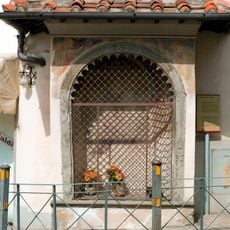
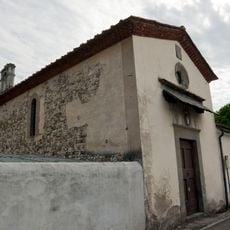
The name "La Tana" means den, from the villa being tucked into the woods on the slopes of Villamagna. Inside, the main hall carries marine scenes painted by Antonio Cioci, framed by stucco work. The Fossi family added the small chapel to the right of the facade in the 19th century.
The villa stands on a natural terrace reached by a curved double staircase decorated with statues, so the approach involves steps rather than a flat path. The gardens behind the building are laid out as a parterre of geometric beds bordered on one side by a green wall. The site is in Candeli, a frazione of Bagno a Ripoli on the road to Villamagna.
The villa's nickname "la tana" means "the den", given because the building sits hidden among the woods on the slopes of Villamagna. The name survived the 17th-century rebuilding by Giulio Foggini, which turned the older two-storey house into a proper villa.
The community of curious travelers
AroundUs brings together thousands of curated places, local tips, and hidden gems, enriched daily by 93,123 contributors worldwide.