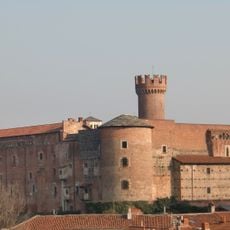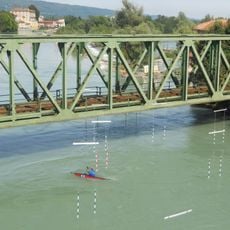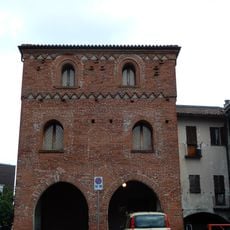
Cathedral of Ivrea, Romanesque cathedral in Ivrea, Italy
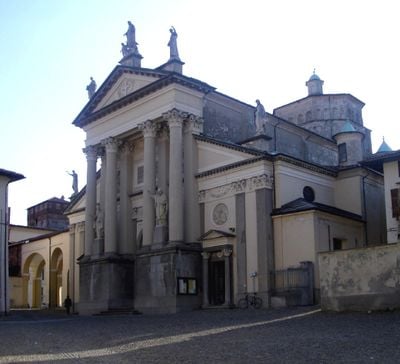
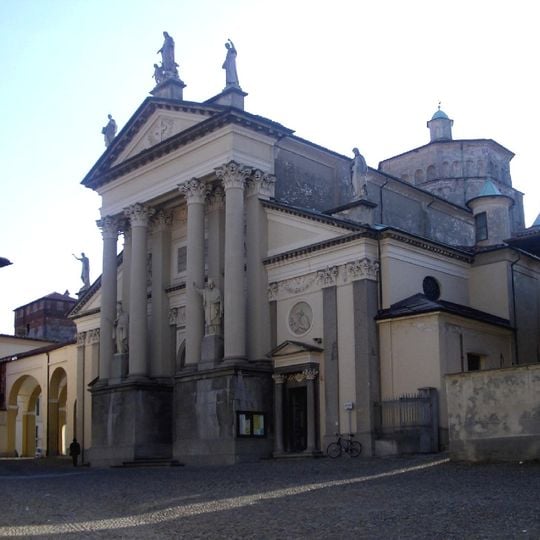
Ivrea Cathedral, dedicated to Santa Maria Assunta, stands on the highest point of Ivrea's old town. Its Neoclassical facade, reworked in Palladian style in 1854, has four tall columns on high bases supporting a triangular pediment with three statues; statues also fill the niches between the columns. Behind rise the two Romanesque bell towers flanking the apse, their outer surfaces divided into seven storeys marked by terracotta cornices and ornamental arches.
The cathedral was built in the 4th century on a former Roman temple site and underwent major reconstruction around 1000 under Bishop Warmondus. This rebuilding shaped the structure for centuries to come.
The cathedral is dedicated to Santa Maria Assunta and was the seat of the bishops of Ivrea, whose chapter of canons had statutes from 1247. In the crypt, thirteenth- to fifteenth-century frescoes survive, some damaged by time; on the foundation pillar of the southern bell tower a holy warrior, possibly a member of the Theban Legion, is depicted.
The cathedral sits along Via San Savino and is easy to reach on foot, with regular opening hours throughout the day. As an active place of worship, visitors should be respectful and try to visit during quieter times.
The oldest part of the crypt, dating to Bishop Warmund's rebuilding around 1000, holds a Roman sarcophagus dedicated to the quaestor Caius Atecius Valerius, reused as the reliquary for Saint Bessus. The crypt also preserves frescoes from the 13th to 15th centuries, some damaged by time.
The community of curious travelers
AroundUs brings together thousands of curated places, local tips, and hidden gems, enriched daily by 94,671 contributors worldwide.