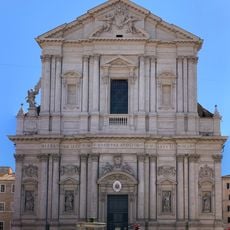
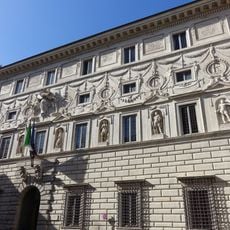
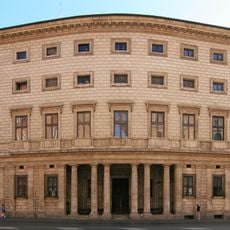
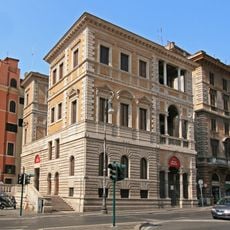
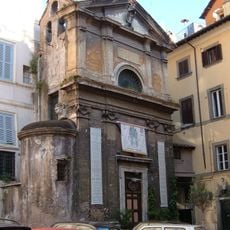
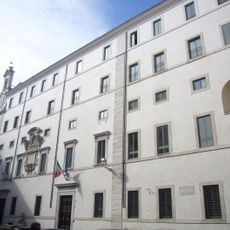
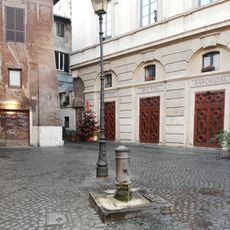
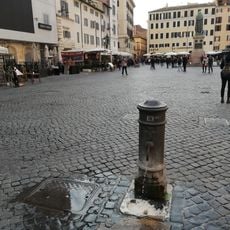
Palazzo Orsini Pio Righetti, Renaissance palace in Parione district, Rome, Italy.
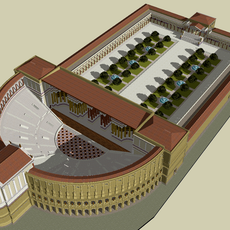
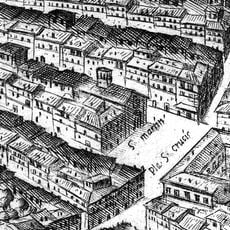
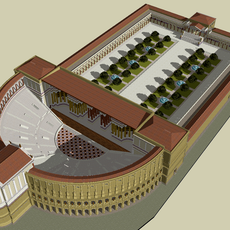
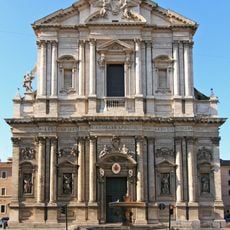
Palazzo Orsini Pio Righetti, also called Palazzo Pio, stands in the Parione district between Campo de' Fiori and Piazza del Biscione, built over the ruins of the Temple of Venus Victrix in the Theatre of Pompey. Its present form dates to around 1450, when Cardinal Francesco Condulmer incorporated part of the fortified Orsini building of the mid-12th century. Camillo Arcucci redesigned the facade in the 17th century for Carlo Pio di Savoia, removing the clock that had faced the piazza.
The palace stands on the ruins of the Temple of Venus Victrix, part of Pompey's Theatre. Around 1450 Cardinal Francesco Condulmer built it in its current form, incorporating a 12th-century fortified Orsini house. The Orsini regained it in the late 15th century, and in 1651 Paolo Giordano II sold it to the Pio di Savoia family. In the 17th century Camillo Arcucci redesigned the facade, removing the clock that had faced the piazza.
The name reflects the families who owned and shaped this residence over generations. The building displays decorative details and proportions that once signaled wealth and status in Renaissance Rome.
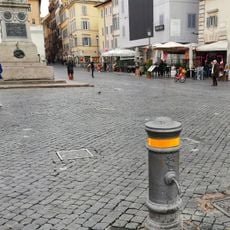
The facade can be viewed from the street, particularly from Campo de' Fiori and Piazza del Biscione where sightlines are clearest. The interior remains off-limits to the public, though the exterior provides a complete sense of its architectural character.
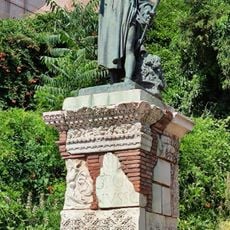
The gilded bronze Hercules found under the courtyard in 1864 stands 3.83 m tall and dates to the 2nd century AD. Pietro Righetti, who bought the palace in the early 19th century, ordered the foundation works that exposed it. In 1865 it passed to Pope Pius IX and was displayed in the Sala Rotonda of the Pio-Clementino Museum as the "Ercole Mastai".
The community of curious travelers
AroundUs brings together thousands of curated places, local tips, and hidden gems, enriched daily by 94,299 contributors worldwide.