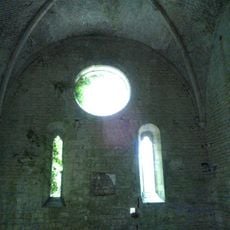
Septempeda, Archaeological site in San Severino Marche, Italy.
Septempeda is a Roman settlement whose ruins include residential structures, thermal baths, defensive walls, and entrance gates spread across an extensive area. The remains reveal mosaic flooring, columns, and other architectural elements that illustrate how the settlement was organized and built.
Septempeda grew from a Picene trade focus into a Roman town after the conquest of Picenum in 268 BC. Between the 3rd and 2nd centuries BC it was organized as a conciliabulum and later a praefectura, receiving municipium status around the mid-1st century BC. After Gothic raids in 545 AD the inhabitants abandoned the site for Monte Nero, and the bishop Severino's remains were moved there in 590.
The archaeological excavations revealed numerous funeral monuments and inscriptions that document the presence of temples dedicated to Jupiter and Feronia.
The ruins are located about two kilometers east of San Severino Marche near the Potenza River in the Pieve area. The site is accessible on foot with good visibility of the excavated structures across the open ground.
The name Septempeda likely comes from the seven hills around the town, echoing Rome's seven hills. The number seven recurs in local tradition: seven gates in the walls of San Severino, the Fountain of Seven Taps in its castle, and seventy-seven arches of the arcade facing the main square.
The community of curious travelers
AroundUs brings together thousands of curated places, local tips, and hidden gems, enriched daily by 94,250 contributors worldwide.