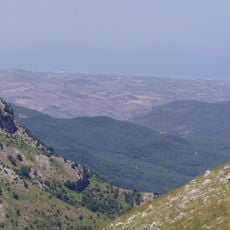
Museo Naturalistico Francesco Minà Palumbo, Natural history museum in Castelbuono, Italy
The Museo Naturalistico Francesco Minà Palumbo is a natural history museum in Castelbuono housed in a former convent, displaying collections related to the flora, fauna, geology, and industry of the Madonie region. The exhibition contains thousands of specimens, including dried plants, insects in glass cases, and minerals from the local area.
The museum is dedicated to Francesco Minà Palumbo, a physician and naturalist from Castelbuono who studied the Madonie between 1837 and 1899. His research covered botany, zoology, geology, palaeontology, archaeology and anthropology, and the collections he assembled became the museum's holdings. Later donations from local naturalists enlarged them.
The museum is named after Francesco Minà Palumbo, the Castelbuono physician and naturalist who assembled the collections through his studies of the Madonie between 1837 and 1899. In recent years local naturalists have donated further material, so the holdings continue to grow beyond his own fieldwork.
The museum is located in a building in central Castelbuono and is accessible to visitors of all ages. It is worth allowing time to explore the different exhibition areas, and asking about guided tours if you want more detailed information about the collections.
The herbarium holds about 7,000 dried plant specimens (exiccata) collected by Francesco Minà Palumbo during his surveys of the Madonie between 1837 and 1899. The museum also keeps endemic Madonie fossils, a collection of land and freshwater molluscs, and Sicilian sulphur and gypsum from the gypsum-sulphur series.
The community of curious travelers
AroundUs brings together thousands of curated places, local tips, and hidden gems, enriched daily by 94,084 contributors worldwide.