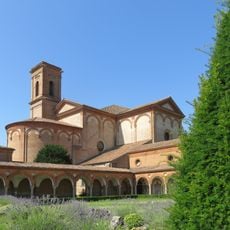
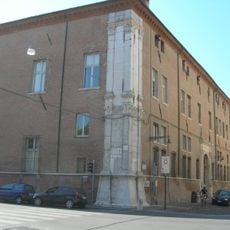
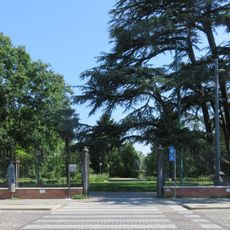
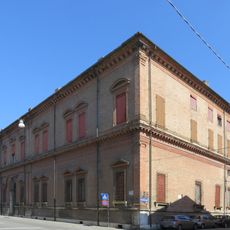
Cimitero Ebraico, Jewish cemetery in Ferrara, Italy
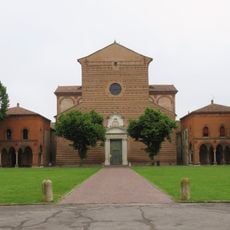
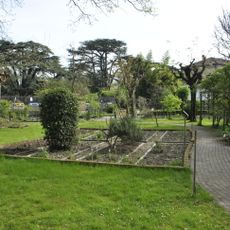
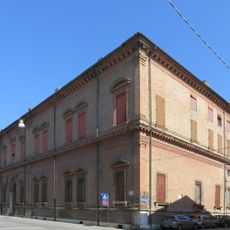
Cimitero Ebraico, also called Orto degli ebrei, lies on Via delle Vigne beneath Ferrara's tree-covered city wall, separate from the nearby Certosa cemetery. A granite portal of 1911 designed by Ciro Contini, influenced by Egyptian monoliths, leads in; a taharah house by the same architect stands right of the main entrance. In the centre is a large, seemingly unused green area covering graves whose stones were forbidden under papal rule.
The cemetery was founded in 1626 and includes burials dating back to 1549, making it one of the oldest active Jewish burial grounds in the region. This long history shows how the Jewish community remained in Ferrara through centuries.
The gravestones display Hebrew inscriptions and Jewish symbols that reflect burial traditions passed down through centuries. Walking here, you notice how the cemetery connects generations of the local Jewish community.
The cemetery lies on Via delle Vigne, near but not connected to the Certosa monumental cemetery, inside the old walls. It is open to all visitors outside Jewish holidays, and men must wear a head covering. The main entrance is on the right of the 1911 granite portal designed by Ciro Contini; many visitors use the small door beside it.
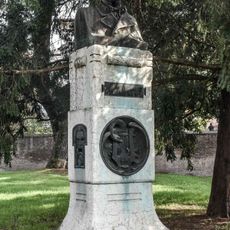
The cemetery is still in use today. In its centre lies a large, seemingly unused green area; beneath it are graves from the period of papal rule from Urban VIII onward, when Jews were forbidden to place gravestones. Marble taken from the cemetery after the 1719 devastation by Inquisition followers was reused in buildings in Ferrara's old town, including the column supporting the statue of Borso d'Este.
The community of curious travelers
AroundUs brings together thousands of curated places, local tips, and hidden gems, enriched daily by 94,346 contributors worldwide.