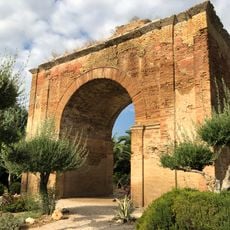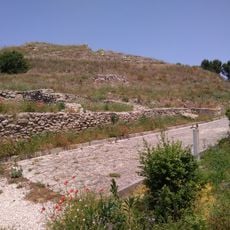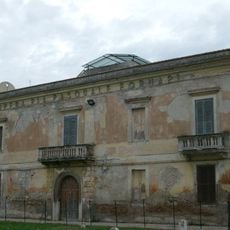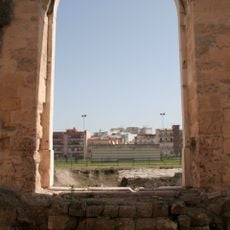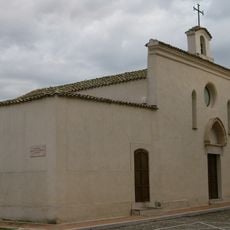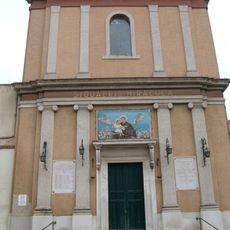
Battistero di San Giovanni, Early Christian baptistery in Canosa di Puglia, Italy.
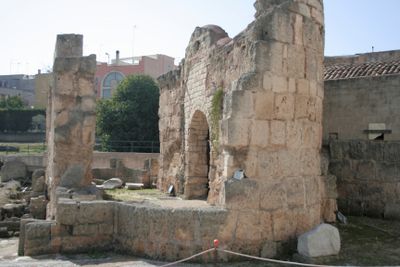
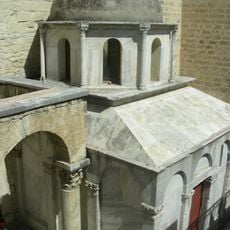
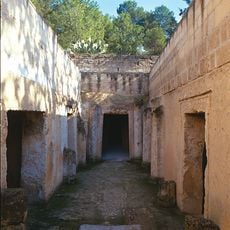
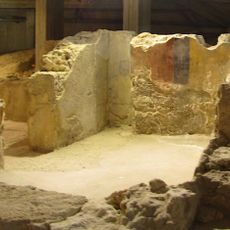
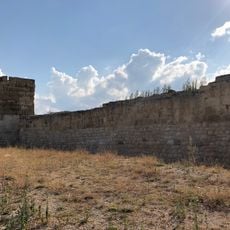
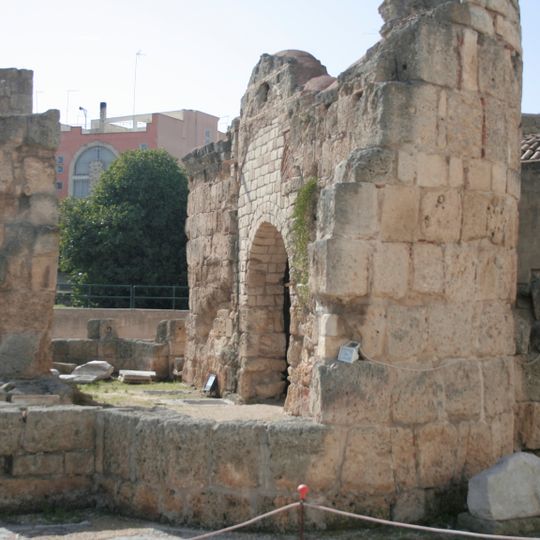
The Battistero di San Giovanni is a 6th-century baptistery in Canosa di Puglia with a dodecagonal plan: four chambers on the main axes form a Greek cross, alternating with four corridors that open onto the central space through one or two doors. At the centre lie the remains of a seven-sided baptismal pool, once covered by a dome.
The structure was built during Bishop Sabinus's tenure between 514 and 566 CE. It formed part of Canosa's sacred defensive complex alongside the Church of Santa Maria.
The anonymous Vita of Bishop Sabinus, written in the 9th century, is the earliest record of the baptistery. In the 18th century E. Mola took the ruins for a pagan temple later turned into a baptistery, while A. Tortora linked the building to Sabinus's burial in the nearby church of Santa Maria. The name comes from John the Baptist, to whom baptisteries are dedicated.
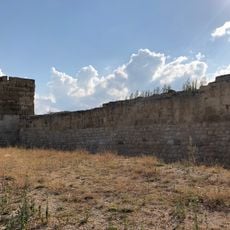
The site requires sturdy footwear as excavations reveal uneven ground and open structural areas. Plan enough time to explore the various chambers and the drainage system once used to manage water flow during ceremonies.
The central pool was heptagonal, made of three brick steps with traces of marble facing, and drained toward the north-east; no supply pipe was found. Glass tesserae covered with gold leaf and floor mosaic fragments with four-pointed stars were recovered there.
The community of curious travelers
AroundUs brings together thousands of curated places, local tips, and hidden gems, enriched daily by 94,027 contributors worldwide.