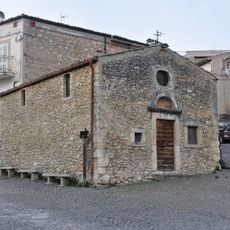
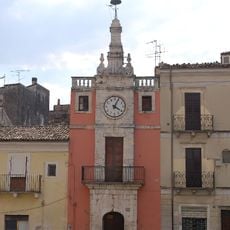
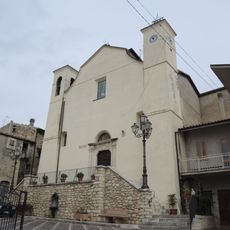
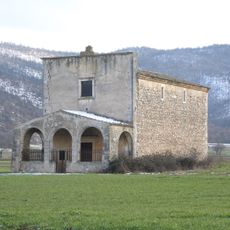
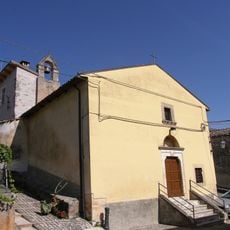
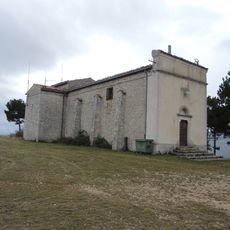
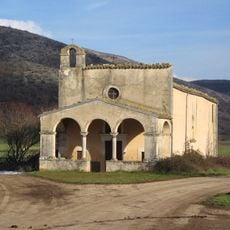
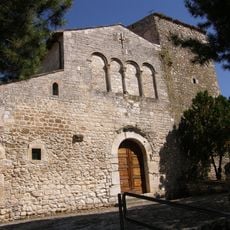
Church of Santa Maria di Cartiganano, Romanesque church in Bussi sul Tirino, Italy.
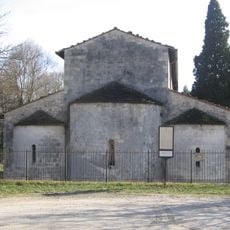
Santa Maria di Cartignano is a ruined Benedictine church near Bussi sul Tirino, with a roofless three-nave interior and a surviving facade and apse. The church was first documented in 1021 as a cell dependent on Montecassino, and became an independent monastery in 1065. It was damaged by floods and abandoned, and since 1968 has been kept as a stabilized ruin.
A papal bull of 1021 mentions a Benedictine cell dedicated to Saint Benedict at Cartignano, dependent on Montecassino, after a priest named Anserano donated land. In 1065, with the purchase of the church of San Gaudenzio and 100 moggia of land, it became a true monastery with a community of monks. Between 1079 and 1216 it passed under the jurisdiction of San Liberatore a Majella, and monastic activity ceased at the end of the 14th century.
The church keeps only wall fragments with figural representations today, especially a Christ figure in the apse, while most of the original frescoes are housed in the National Museum of L'Aquila.
The roofless ruin stands beside the SS153 road near Bussi sul Tirino, visible from the carriageway and reachable by car. The site has been made safe and open to visitors since the 1968 restoration, but there are no water or electrical facilities. Alluvial deposits from the nearby Parata torrent buried the former monastic outbuildings, so only the church itself can be visited.
Roman architectural fragments appear embedded in the exterior walls, reused from older structures and documenting medieval construction practices. This material reuse was a common method in church building of that era.
The community of curious travelers
AroundUs brings together thousands of curated places, local tips, and hidden gems, enriched daily by 93,362 contributors worldwide.