Taverna ducale, Medieval civil building museum in Popoli, Italy.
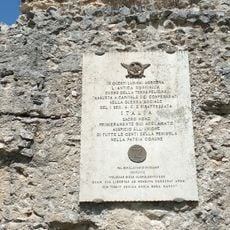
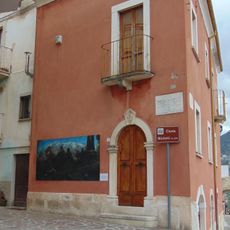
Taverna Ducale is a 14th-century palazzetto in Popoli Terme, once belonging to the Cantelmo family, now a museum. Its facade carries a plaque recalling its origin as a casa-bottega for collecting tithes. The permanent collection of stone materials includes two headless Roman statues, a 1st-century pagan altar, a column with an Ionic capital, a limestone stele of the 1st–2nd century AD, and two 16th-century reliefs showing the Almighty and the Announcing Angel.
The building was erected in the second half of the 14th century as a "casa-bottega" for the Cantelmo family, to collect tithes on the produce of their estates, as a plaque on the facade recalls. It later became a tavern for buyers and wayfarers, with upper-floor rooms used as an inn. In 1875 Francesco Forniti bought it and used it as a stable before it fell into disuse and was acquired by the Ministry of Public Education.
The museum's permanent collection is made up of stone materials: two headless Roman statues, a pagan altar from the 1st century, a column with an Ionic capital and a limestone stele from the 1st–2nd century AD. Two 16th-century bas-reliefs show the Almighty and the Announcing Angel.
The building sits on Via Giuseppe Garibaldi within easy walking distance from the town center. Admission is free and the displays are arranged to guide visitors through the different archaeological periods on view.
The plaque on the facade records the building's origin as a tithe storehouse of the Cantelmo family. In 1875 Francesco Forniti bought it and turned it into a stable, before it passed to the Ministry of Public Education and later became a museum.
The community of curious travelers
AroundUs brings together thousands of curated places, local tips, and hidden gems, enriched daily by 94,083 contributors worldwide.