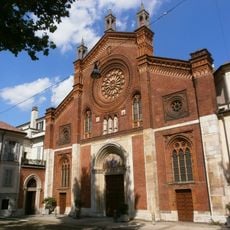
Palazzo Moriggia, Neoclassical palace and museum in Brera district, Milan, Italy.
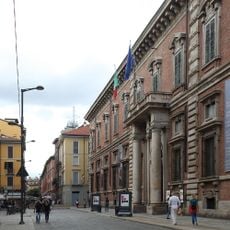
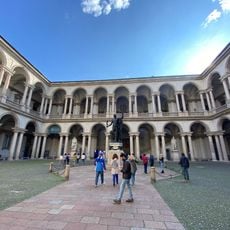
Palazzo Moriggia is a three-story neoclassical palace at Via Borgonuovo 23, near the Brera complex. Its facade has a central section with Doric pilasters on the lower level and Ionic on the upper, while the ends are rusticated. An arched portal flanked by two columns leads to a rectangular courtyard with arcades and the monumental staircase on the right.
Giuseppe Piermarini designed the palace in 1775 for Marquis Giovanni Battista Moriggia, on land formerly held by the Umiliati order. After Moriggia died childless in 1783, it passed to the Besozzi counts in 1787 and then to Alessandro Trivulzio. During the Napoleonic era it housed first the foreign affairs ministry and later the war ministry. Rosa De Marchi Curioni donated it to Milan in 1900 for the Risorgimento museum.
The museum inside displays works and objects connected to Italy's path toward nationhood, including paintings and sculptures from key figures of that era. Visitors can directly experience how this place played a role in the country's sense of identity.
The museum sits in central Milan's historic core and is easily reached on foot from public transit stops. Arriving in the morning allows you to browse the collections without crowds.
The palace stands on land that belonged to the Umiliati monastic order before the Moriggia family built here in 1775. Its courtyard facades were restored for the 150th anniversary of Italian unification by restorer Enzo Medardo Costantini, under architect Riccardo Zanetta, with Akzo Nobel sponsorship.
The community of curious travelers
AroundUs brings together thousands of curated places, local tips, and hidden gems, enriched daily by 94,540 contributors worldwide.