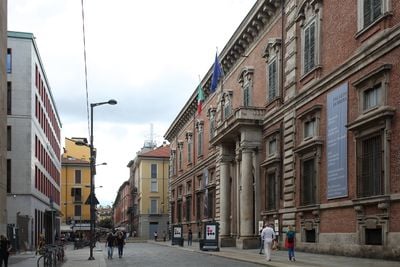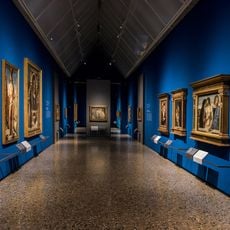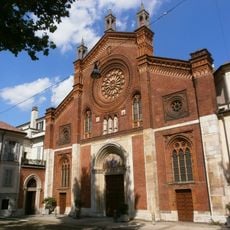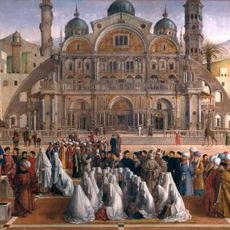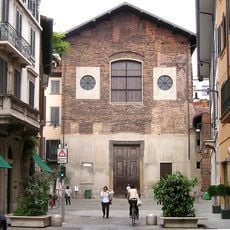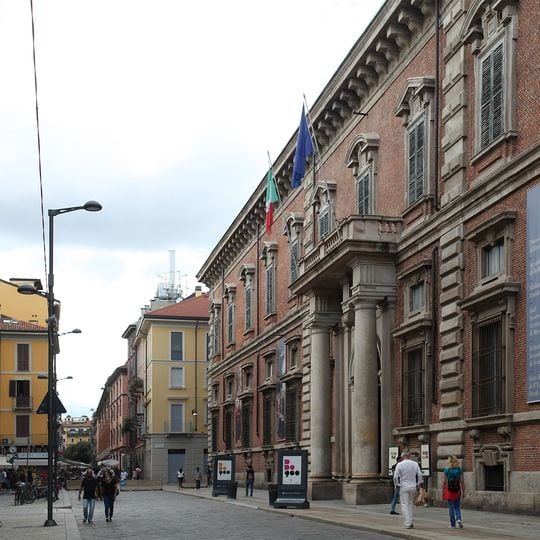
Palazzo Brera, Mannerist palace housing art academy and cultural institutions in Brera, Milan, Italy
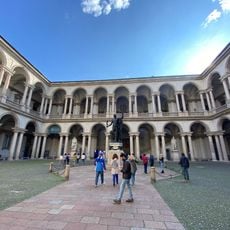
Palazzo Brera is a large complex in Milan housing multiple cultural institutions within its interconnected wings and floors. A substantial courtyard with an imposing staircase serves as the central spine connecting the various galleries, libraries, and academic spaces throughout the structure.
The site began as a Humiliati monastery on land of Guercio da Baggio, documented before 1178; the order was suppressed in 1571 and the monastery became a Jesuit college. Francesco Maria Richini designed the present palace from about 1615, with work interrupted by the 1630 plague and resumed in 1651. After the Jesuits were suppressed in 1773, Maria Theresa of Austria turned it into a seat of schools, the Biblioteca Braidense and the Accademia di Belle Arti.
The name Brera comes from the Lombard braida, a field or enclosed plot near the settlement. The Humiliati, a wool-working order, held the site from before 1178; after their suppression in 1571 it passed to the Jesuits as a college. Today the palace houses the Accademia di Belle Arti, the Pinacoteca, the Braidense library and the astronomical observatory.
Access to the complex begins at the Via Brera entrance, and visitors can navigate using the main staircase and corridors that lead to different sections and institutions. Since each cultural venue operates independently, it helps to know what you want to see before entering to make the most of your time.
The bronze Napoleon as Mars the Peacemaker in the courtyard is a copy: cast in Rome in 1811 by Francesco Righetti and his son Luigi from Canova's marble, it was placed here in 1859. The original marble is in the Galleria d'Arte Moderna in Milan.
The community of curious travelers
AroundUs brings together thousands of curated places, local tips, and hidden gems, enriched daily by 94,657 contributors worldwide.