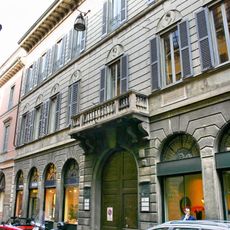
Palazzo Cusani, Baroque palace in Brera District, Milan, Italy.
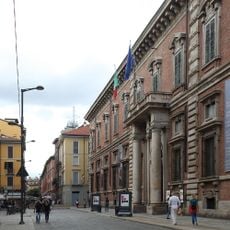
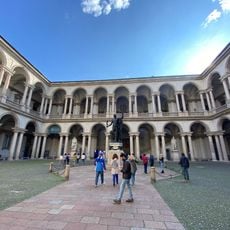
Palazzo Cusani is a 17th-century palace at Via Brera 13–15 in Milan. Its exterior facade, rebuilt by Giovanni Ruggeri between 1694 and 1719, has mixtilinear window frames, bulging balconies and two twin portals, with exposed sandstone and ceppo dell'Adda. The interior facade was remodelled by Giuseppe Piermarini in Neoclassical forms between 1775 and 1779.
The outer facade was redesigned between 1694 and 1719 by architect Giovanni Ruggeri under Gerolamo Cusani's direction. Later, between 1775 and 1779, Giuseppe Piermarini carried out extensive renovations of the interior spaces.
The Cusani family gave the palace its name; Ferdinando Cusani (1737–1815) held parties and balls in its garden, which was largely lost. The piano nobile keeps most of its 18th-century decorations, listed in the 1808 deed of sale. Two twin portals on the facade are said to have been wanted by two brothers who wished not to meet.
The building sits at Via Brera 13-15, a well-known arts street in central Milan that is easy to reach on foot. Access is limited since the palace now serves as a military command center and diplomatic headquarters.
The rear wall bears traces of a historical battle, with three cannonballs still embedded in it today, making the city's dramatic past visible. These impact marks come from the turbulent Five Days of Milan uprising that took place in 1848.
The community of curious travelers
AroundUs brings together thousands of curated places, local tips, and hidden gems, enriched daily by 92,808 contributors worldwide.