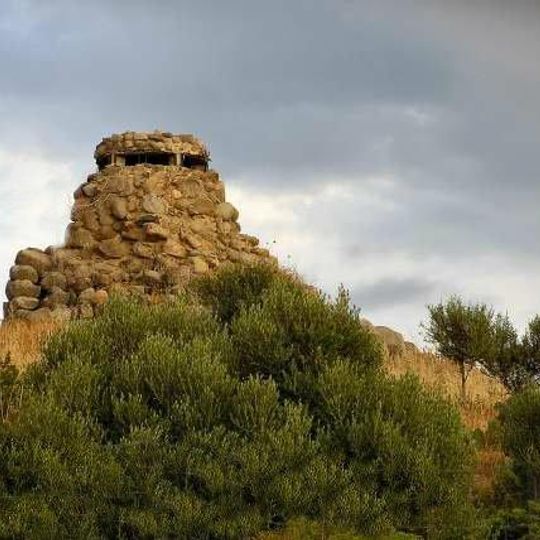
Nuraghe Diana, Archaeological site in Quartu Sant'Elena, Italy
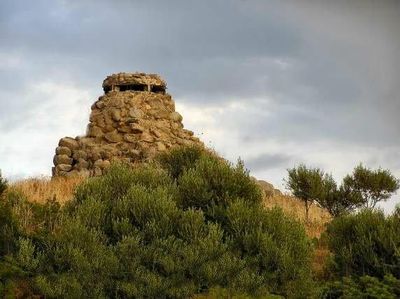
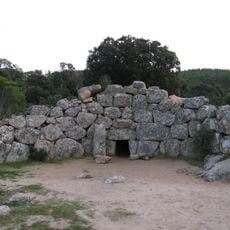
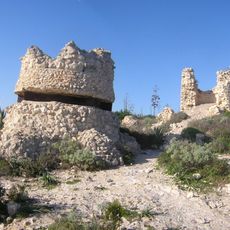
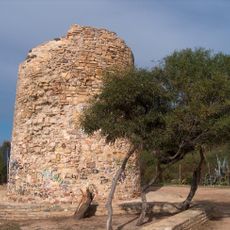
Nuraghe Diana is a trilobate nuragic complex on a hill at Is Mortorius, in Quartu Sant'Elena. A central mastio with two niches and a tholos roof is flanked by two smaller towers, partly preserved, linked by a square inner courtyard that gives the whole a triangular plan. The entrance lies to the southeast, with two guard niches in the wall.
The site dates to the 2nd millennium BC and belongs to the Nuragic culture (about 1600–400 BC), following the Bonnanaro culture (2200–1600 BC). Its preservation is owed to its reuse as a fortress in World War II, when a concrete roof with openings was added to the central mastio. It was excavated and restored shortly before the sources were written.
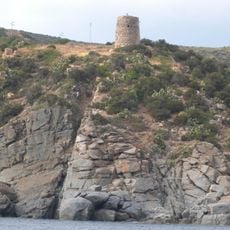
The structure shows how Nuragic people used this location as a fortification on the coast to protect their settlements and trade routes. The building gives a sense of how important this area was to the ancient communities of the region.
Visitors can explore the ruins and view the stone construction techniques up close, though the terrain is uneven and requires careful footing. Wearing sturdy shoes is recommended since ancient stonework and exposed foundations can present tripping hazards.
The structure survived largely because it was used as a fortress in World War II: a concrete roof with openings was poured onto the central mastio, and that slab is still visible today. Nearby nuraghi such as Niu Crobu and Capitana were quarried for stone to build modern houses, but Diana kept its tower intact.
The community of curious travelers
AroundUs brings together thousands of curated places, local tips, and hidden gems, enriched daily by 93,519 contributors worldwide.