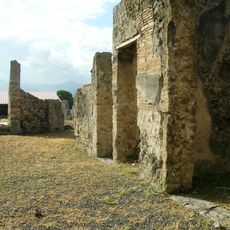
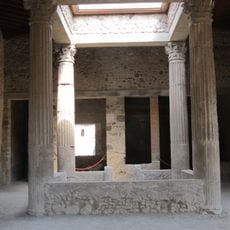
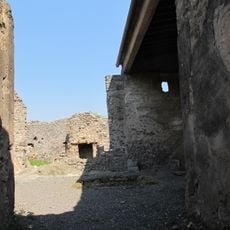
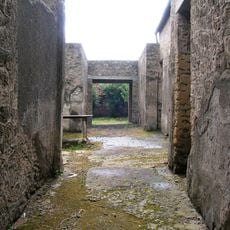
House of the Ephebus, Archaeological residence in Pompeii, Italy.
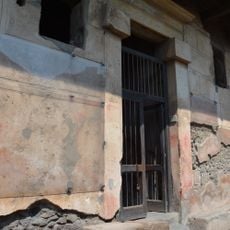
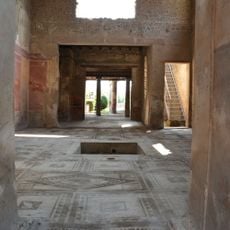
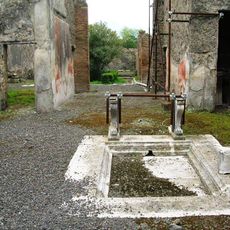
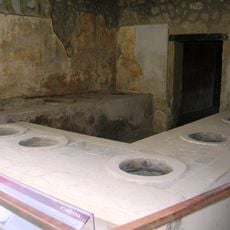
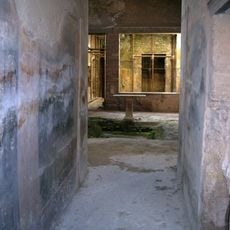
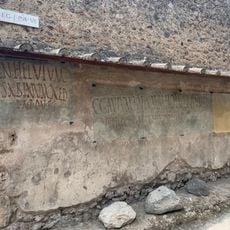
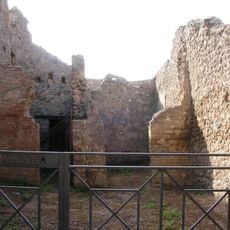
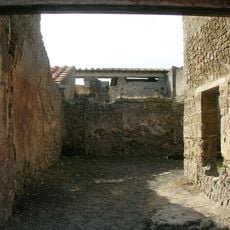
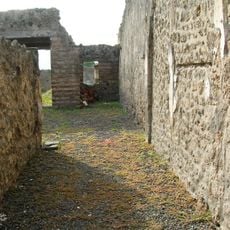
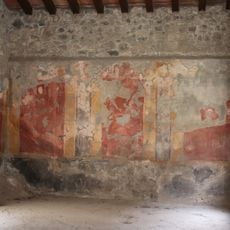
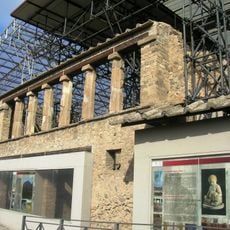
The House of the Ephebus is a Roman house of about 650 square metres formed by joining two or three dwellings, with three entrances on a side street of Via dell'Abbondanza. The upper entrance has half-columns with cubic capitals and a plaster cast of the double door; inside, the atrium is fully roofed and has no impluvium. Fourth-style frescoes run through the rooms, and the floors are mostly opus signinum.
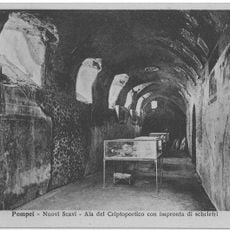
The house belonged to Publius Cornelius Tegestus, a middle-class merchant enriched by trade and a collector of art. It was formed by joining two or three dwellings and was undergoing restoration when Vesuvius buried it in 79 AD; three skeletons were found inside. First explored in 1912 and again between March and September 1925, it reopened to the public in December 2015.
The house takes its name from a statue of an ephebe found in the garden; a bronze arm of it was kept in a cupboard under the stairs. In the atrium, a niche lararium shows a fresco of a Genius pouring a libation, a flute player, an attendant and dancing Lares, with two snakes painted below, one bearded and red-crested.
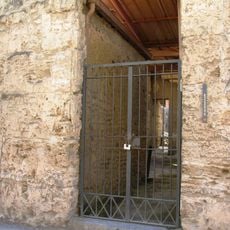
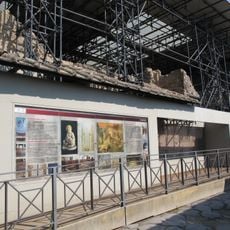
Entry is through a secondary door that provides easy access to the complex. Visitors should expect uneven ground and wear comfortable shoes to explore the different areas.
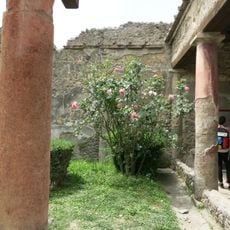
The house takes its name from a statue of an ephebe found in the garden; a bronze arm of it was kept in a cupboard under the stairs, together with glass and bronze vessels. The garden itself was not in use as a leisure area at the time of the eruption: rubble lay there during restoration works.
The community of curious travelers
AroundUs brings together thousands of curated places, local tips, and hidden gems, enriched daily by 93,574 contributors worldwide.