San Lanfranco Church, Romanesque church in Pavia, Italy
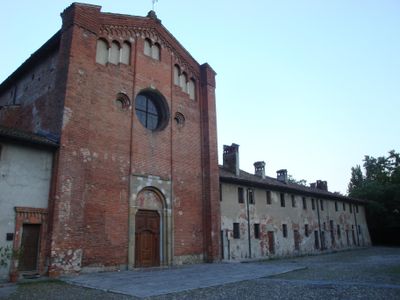
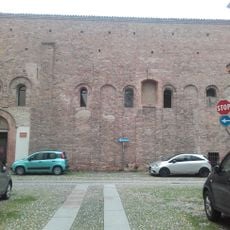
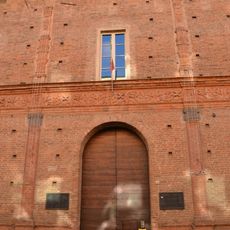
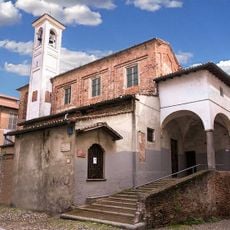
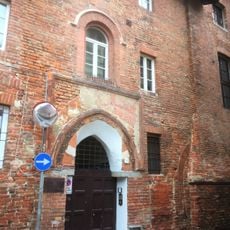
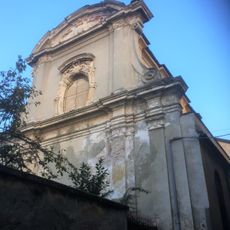
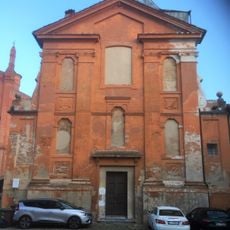
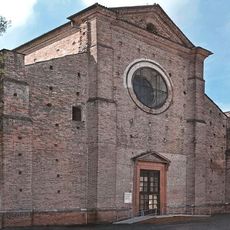
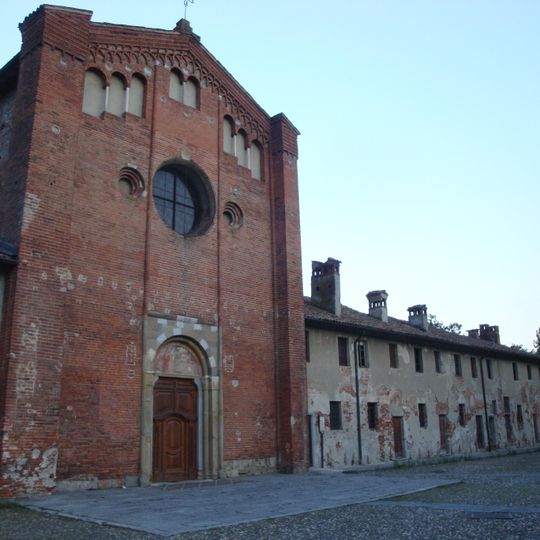
San Lanfranco is a Romanesque church in Pavia with a Latin-cross plan, a tripartite facade flanked by two large buttresses, and a blind loggia on top. The upper facade is decorated with archaic majolica basins, and the slender brick bell tower, built in 1237, has five mirrored sections with six simple arches and a three-mullioned bell chamber.
A church dedicated to the Holy Sepulchre stood here by 1090; the Vallombrosan monastery is documented from 1123. Bishop Lanfranco Beccari, exiled for opposing civil authorities, died in the monastery in 1198 and was buried there. The church was consecrated in 1236, the bell tower built in 1237 and the facade finished in 1257. In 1524 Francis I of France set up his headquarters in the monastery during the siege of Pavia.
The church is named after Lanfranco Beccari, bishop of Pavia from 1180, who spent his last years in the monastery and was buried here after his death on 23 June 1198; the church was dedicated to him soon after. His relics are kept in the Arca di San Lanfranco, the carved tomb commissioned by abbot Luca Zanachi and made from Amadeo's designs between 1498 and 1508.
The location sits in western Pavia near the Ticino River and is accessible on foot. Visitors should keep in mind that access times may vary, so checking ahead before arriving is helpful.
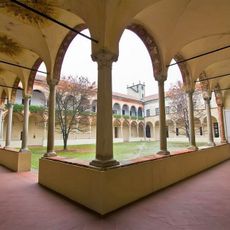
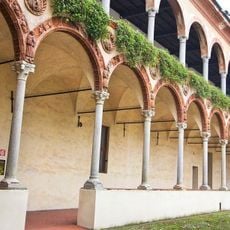
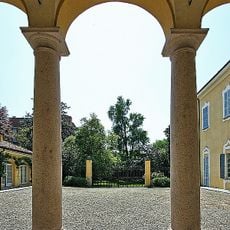
The Arca di San Lanfranco, the saint's tomb, was built between 1498 and 1508 to designs by Giovanni Antonio Amadeo, who also rebuilt the small cloister in 1476. Its reliefs narrate Lanfranco's life; the same sculptor's work can be compared in the cloister capitals.
The community of curious travelers
AroundUs brings together thousands of curated places, local tips, and hidden gems, enriched daily by 93,896 contributors worldwide.