Petre de la Mola, Rock formation and archaeological site in Gallipoli Cognato Park, Italy
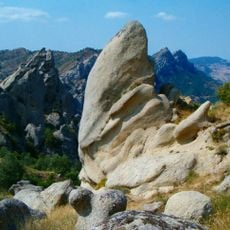
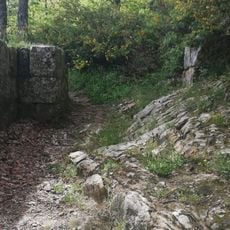
Petre de la Mola is a rock formation in Gallipoli Cognato Park composed of multiple limestone blocks shaped by natural erosion over time. The structure sits at approximately 1000 meters elevation and spreads across several municipalities in the region.
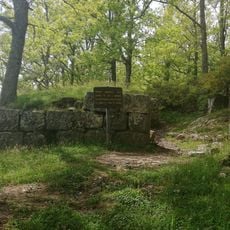
Archaeological excavations at Monte Croccia uncovered Bronze Age pottery and rock carvings indicating early human settlement in the area. These findings show that people inhabited this region during prehistoric times.
The name Petre de la Mola has no documented origin. In the local dialect mola is the stone used to sharpen blades, but the calcarenite here is too soft for that. Vito Francesco Polcaro and Leonardo Lozito suggested the Indo-European root mul, as in mule, a sterile hybrid, so the site may have been meant to favour fertility.
The site is accessible via hiking trails that pass through several municipalities and lead to the rock formations. Visitors should wear appropriate footwear and explore the area during daylight hours when visibility is best.
A 2008 laser scan revealed two alignments visible from a single point north of the megalith: at the winter solstice the setting sun passes through a gap between the two largest blocks, and at noon it settles on a boulder forming a small basin. A petroglyph near the viewpoint marks the meridian and a line at 238°.
The community of curious travelers
AroundUs brings together thousands of curated places, local tips, and hidden gems, enriched daily by 94,358 contributors worldwide.