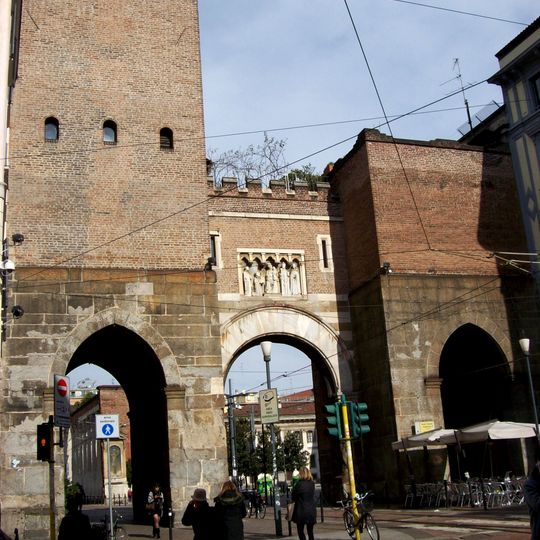
Medieval walls of Milan, Medieval defensive walls in Milan, Italy
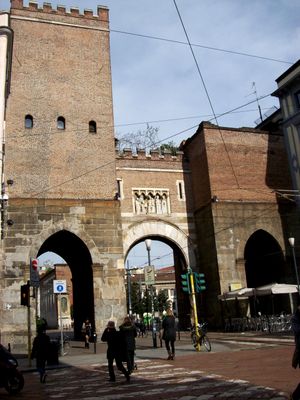
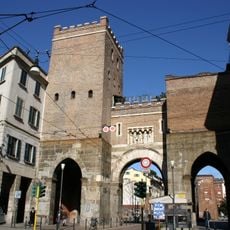
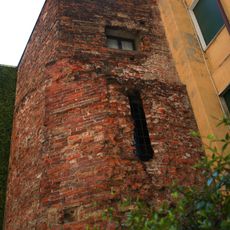
The Medieval walls of Milan were a ring of fortifications begun in 1156, with eight gates and eleven smaller posterns (pusterle). Of these, only Porta Ticinese survives, the sole gate with a single archway, now standing at the junction of Corso di Porta Ticinese, Via Molino delle Armi and Via De Amicis. The 1162 walls were built in masonry with a moat fed by the Olona, after Frederick Barbarossa had destroyed the earlier Roman walls.
The first medieval circuit was built in 1156 by the Genoese military engineer Guglielmo da Guintellino, using earth ramparts reinforced with palisades and wooden towers. After Frederick Barbarossa razed Milan in 1162, work began in 1171 on a masonry wall with a flooded moat fed by the Olona. Completed under Azzone Visconti, it was demolished in the 16th century as gunpowder made it obsolete.
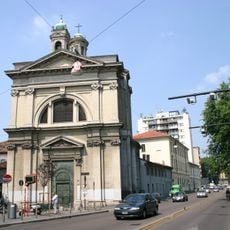
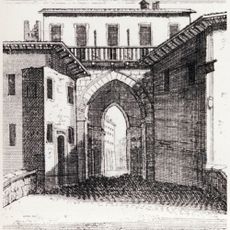
Porta Ticinese, at the crossing of the present corso with via Molino delle Armi and via De Amicis, is the only medieval gate still standing and the only one built with a single archway. The other gates survive only as street names, such as Porta Romana and Porta Orientale, which still mark the old entry routes toward Rome and Bergamo.
Of the medieval gates only Porta Ticinese survives, at the junction of corso di Porta Ticinese with via Molino delle Armi and via De Amicis; it had a single archway. The 1156 moat line is followed today by the Cerchia dei Navigli ring road, covered over between 1929 and 1930. Look for the pale stone frame and the relief panel with five carved figures above the central arch.
The 1156 moat drew water from the Seveso and the Pudiga, not the Nirone; the Olona was added after 1171. The ditch was later deepened into the Cerchia dei Navigli, navigable until the early 20th century and covered over between 1929 and 1930.
The community of curious travelers
AroundUs brings together thousands of curated places, local tips, and hidden gems, enriched daily by 93,478 contributors worldwide.