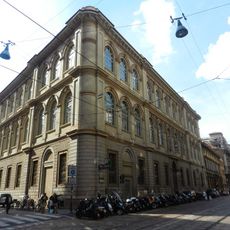
Porta Romana, Roman city gate in Milan, Italy
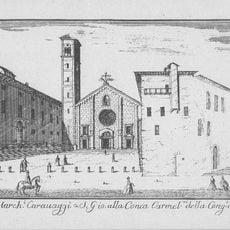
Porta Romana was a gate in the Roman walls of Mediolanum, now Milan, built during the Republican era. It opened onto the Via Mediolanum-Placentia, the road to Piacenza and Rome, whose first stretch was lined with porticoes and called Via Porticata. Inside the walls the gate led to the decumanus; the Cripta di San Giovanni in Conca and the Basilica di San Nazaro in Brolo stand near its route. It was demolished in 1162.
Porta Romana was built during the Roman Republic, likely under Caesar after Mediolanum became a municipium in 49 BC. It was demolished in 1162 during the siege of Milan by Frederick Barbarossa, along with the city walls and other gates. The gate had witnessed earlier sieges of Milan in 268, 402, 452 and 538–539.
The name comes from the road that left here for Placentia and then Rome. The first stretch outside the walls, the Via Porticata, was lined with porticoes and ended at a triumphal arch. Inside the walls, the decumanus led to the forum at today's Piazza San Sepolcro.
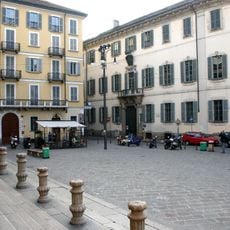
Nothing of the gate survives: it stood where corso di Porta Romana now runs, beside the Cripta di San Giovanni in Conca. Look for the crypt remains to locate the ancient crossing, and follow the old decumano toward piazza San Sepolcro, the former Roman forum, at the other end.
The gate stood where corso di Porta Romana now runs, near the Cripta di San Giovanni in Conca. Just outside the walls, the Via Porticata led to the basilica apostolorum, today the Basilica di San Nazaro in Brolo, which still stands.
The community of curious travelers
AroundUs brings together thousands of curated places, local tips, and hidden gems, enriched daily by 94,678 contributors worldwide.