Palazzo Piacentini, Ministry building in Regola, Rome, Italy
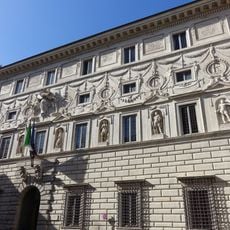
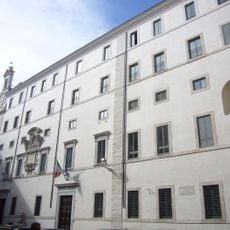
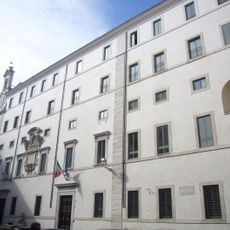
Palazzo Piacentini stands on Via Arenula in the Regola district, near Ponte Garibaldi, and houses the Italian Ministry of Justice. Built to Pio Piacentini's 1913 design, it has a vaguely Renaissance-style travertine facade with diamond-point rustication on the ground floor, a decorated cornice of ovoli and palmettes, and loggias in the two recessed side wings. Coat of arms of the House of Savoy mark the corners of the projecting block, and four relief tondos around the portal urge respect for justice.
Pio Piacentini presented the project for the Ministry of Justice and Cults in 1913, inspired by late-15th-century Renaissance classicism. Excavation and foundations began in 1914 but stopped during World War I. The ministry moved from Palazzo Firenze in 1920; the building was completed in 1924, and the rear wing's upper storey was finished in 1932.
The building is the seat of the Italian Ministry of Justice, which moved here in 1920 from Palazzo Firenze. On the portal, four reliefs carved in tondos call for respect for justice, and the corners of the projecting body carry coats of arms of the House of Savoy.
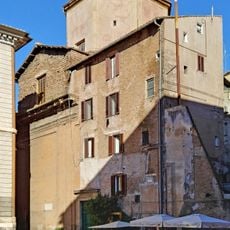
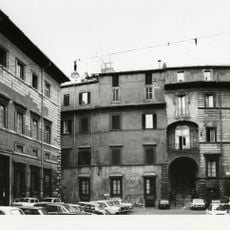
The building is a working government ministry, so the interior is not open to visitors; the facade can be seen from Via Arenula, near Ponte Garibaldi. The rear wing, raised in 1932, is best viewed from the side facing Via di San Paolo alla Regola, where the surviving Case di San Paolo stand.
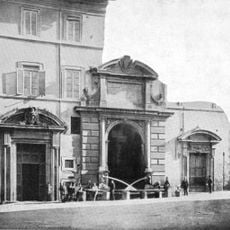
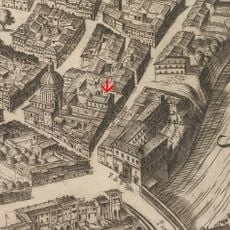
The building replaced several Renaissance houses on the left side of Via della Seggiola; only the Case di San Paolo survived, now standing at the back of the palace on Via di San Paolo alla Regola. On the portal, four reliefs carved in tondos urge respect for justice.
The community of curious travelers
AroundUs brings together thousands of curated places, local tips, and hidden gems, enriched daily by 93,537 contributors worldwide.