Galleria Spada, Art museum in Capodiferro Palace, Rome, Italy
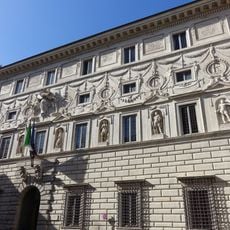
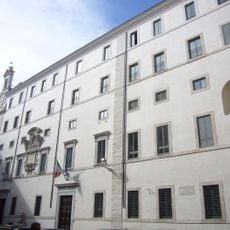
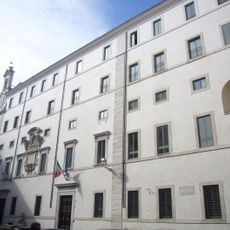
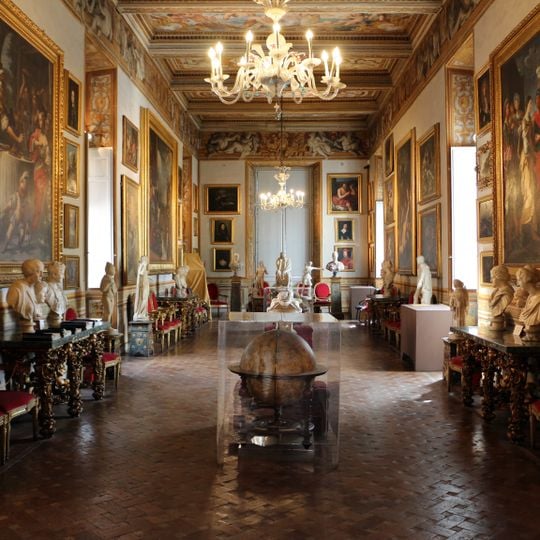
Galleria Spada occupies the first floor of Palazzo Spada on Piazza Capo di Ferro, in the wing built for Cardinal Girolamo Capodiferro. Its four rooms hold 16th- and 17th-century paintings hung in rows above marble busts and dark wooden tables, with a coffered ceiling painted with figures and a large glass chandelier. A globe of the early 18th century by W. Blaeu sits in a glass case in the centre.
Palazzo Spada was built from 1540 for Cardinal Girolamo Capodiferro, with Bartolomeo Baronino as architect and stuccowork by Giulio Mazzoni. Cardinal Bernardino Spada bought it in 1632 and had Borromini remodel it. The Italian State purchased the building in November 1926, and the gallery opened in 1927. Closed during the 1940s, it reopened in 1951 after Federico Zeri, director from 1948, recovered the dispersed paintings and recreated the 17th-century hang.
The four rooms keep the arrangement Federico Zeri recreated after 1948, with paintings hung in rows above furniture and marble busts. Room I is called the Room of the Popes for fifty inscriptions on the lives of pontiffs, and the Room with the Azure Ceiling for its turquoise canvas ceiling of 1777.
The museum opens from Wednesday to Monday and sits near Campo de' Fiori in the city center. The rooms are small and fill up quickly, so a morning visit or a trip outside peak season works best.
The famous colonnade by Borromini measures only 9 meters but appears four times longer through optical trickery. The floor rises slightly and the columns taper, enhancing the illusion of depth and surprising every visitor who walks toward it.
The community of curious travelers
AroundUs brings together thousands of curated places, local tips, and hidden gems, enriched daily by 93,330 contributors worldwide.