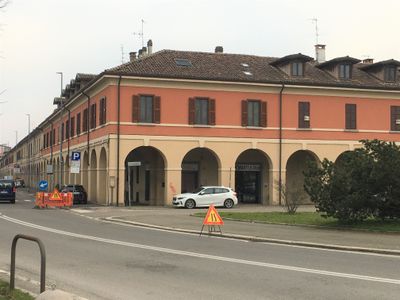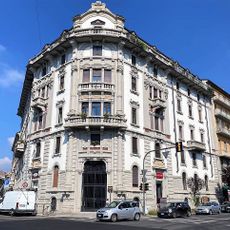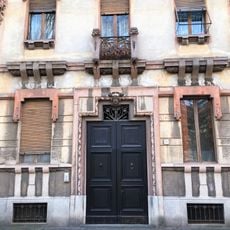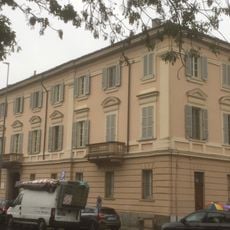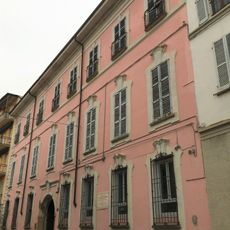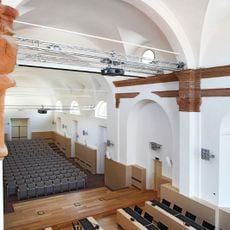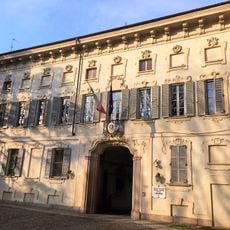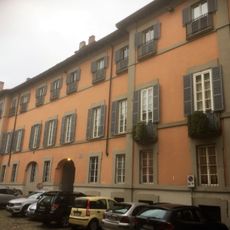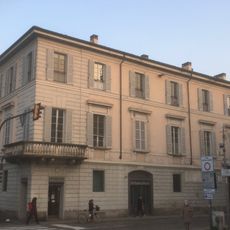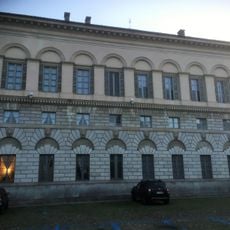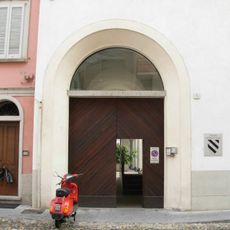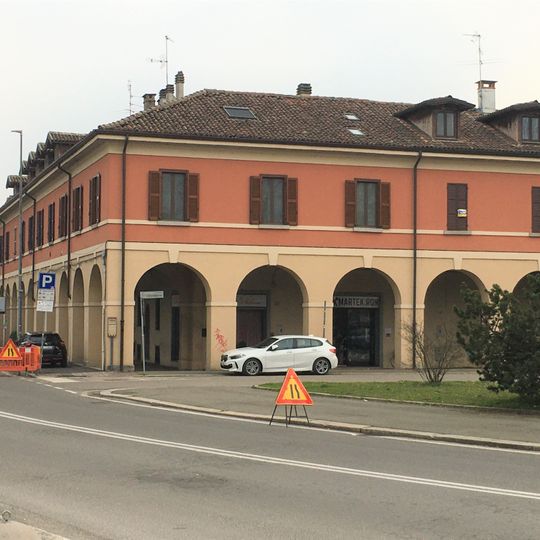
Borgo Calvenzano, Architectural ensemble in Pavia, Italy.
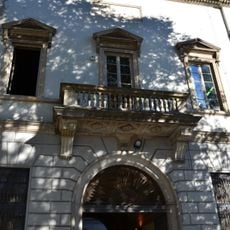
Borgo Calvenzano is an architectural complex that stretches along Viale Bligny, defined by continuous arcades with rounded arches spanning its length. The two-story buildings form a connected row, with inner courtyards designed to accommodate boats and animals, along with storage, stables, shops, and inns.
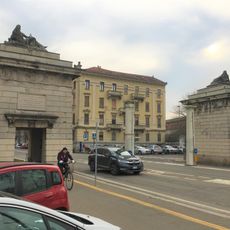
In 1816 Pavia's municipal engineers planned eight uniform buildings with a continuous arcade on 20,000 sq m outside Porta Milano, to serve the Naviglio Pavese. After three deserted auctions, Gaetano Franzini bought the whole area in 1817, promising completion by 1823. He sold one lot to Bernardino Martignoni's lime-and-brick firm, and disputes over his low price and slow work led the Milan court in 1827 to return all lots but Martignoni's to the city. After 1840 the remaining lots were tied to arcade completion, and Martignoni finished the borgo in 1850.
The ground floor rooms still show traces of the craftspeople who worked here to support traffic on the Naviglio Pavese waterway. Walking through the spaces, you can sense how central the waterway was to the life of this place.
The complex is best explored on foot along Viale Bligny to view the arcades and their details closely. The inner courtyards are partially accessible but may have limited views, so walking along the front facade gives the clearest sense of the layout.
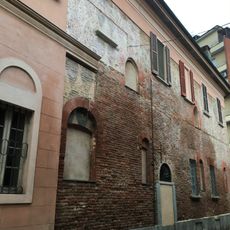
The ground-floor spaces held not only warehouses, stables, shops and inns but also an oil press and two bakeries, alongside blacksmiths, carpenters, saddlers, grooms, boatmen and carters who lived here with their families. Some 19th-century painted signs of the old inns still survive on the facades.
The community of curious travelers
AroundUs brings together thousands of curated places, local tips, and hidden gems, enriched daily by 94,679 contributors worldwide.