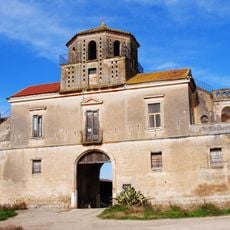
Castello di Casertavecchia, Medieval castle in Casertavecchia, Italy.
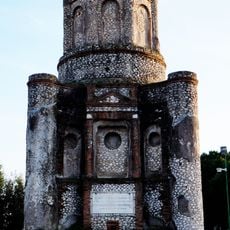
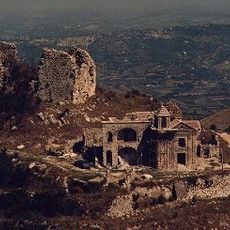
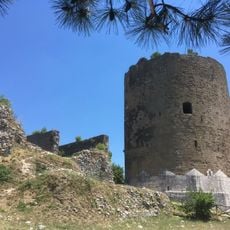
Castello di Casertavecchia is a ruined castle on a small hill in Casertavecchia, a hamlet of Caserta. Its irregular hexagonal enclosure is formed by curtain walls and towers, with a residential palace on the north-east side and a 16-sided cylindrical keep to the south-east. The keep has three vaulted levels and a rooftop terrace; the lowest level is a cistern.
The first document naming the castle dates from 1277, when it was distinguished from the tower; the chapel of San Giovanni appears in a 1300 document. Diego della Ratta's 1327 testament already described it as "mostly ruined". Santoro's account of 1528 mentions wide apartments and large halls, suggesting a restoration under Count Andrea Matteo Acquaviva between the late 1400s and early 1500s. The merlons still present in the late 1600s and sketched by Pacichelli in 1703 were later removed.
The castle's name appears in a 1277 document that first distinguishes the castle from the tower; the chapel of San Giovanni is recorded in 1300. A stone plaque with an ancient inscription, transcribed by C. Esperti and noted by Mommsen, was once kept here but is now lost.
The castle stands on the highest point of a small hill at the north-eastern edge of Casertavecchia, reachable on foot along village lanes. The inner courtyard was cleared during the 1980s restoration, and the site is only partly made accessible. The lower level of the keep is a cistern and cannot be entered.
The keep has sixteen sides and three vaulted levels; the lowest was a cistern and cannot be entered. A doorway once linked the first floor to the count's palace by a wooden bridge, probably a drawbridge, now lost. A stone stair inside the wall leads to the top terrace.
The community of curious travelers
AroundUs brings together thousands of curated places, local tips, and hidden gems, enriched daily by 93,648 contributors worldwide.