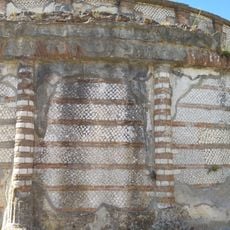
Mausoleum of the Conocchia, Roman mausoleum in Curti, Italy.
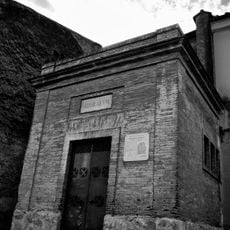
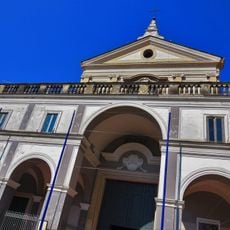
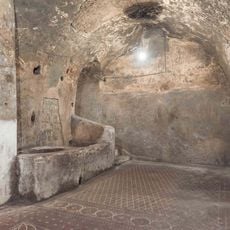
The Mausoleum of the Conocchia rises along the ancient Via Appia in Curti. Its structure stacks a cubic base, a middle body with convex sides, a monopteros with blind intercolumniations, and a top section shaped as an aedicula or tholos. Inside, the burial chamber has eleven niches arranged in groups of three, except two on the entrance side.
The monument dates from the Roman period and was later extensively restored during the reign of Ferdinand IV of Bourbon. Architect Carlo Vanvitelli modified portions of the original structure while maintaining its Roman character.
The name Conocchia comes from the shape's resemblance to a distaff, the tool used for spinning wool. Tradition holds that Flavia Domitilla, niece of Vespasian, was buried here after being persecuted under Domitian for her Christian faith; other accounts name Appius Claudius Caecus, builder of the Via Appia in 312 BC.
The monument stands along the ancient Via Appia, one of Rome's major ancient roads, making it relatively straightforward to locate. Visitors should wear comfortable shoes as the surroundings are rural and access involves walking across open land.
The structure takes its name from its resemblance to a conocchia, a traditional spinning tool used in textile work. This unusual naming choice shows how Roman burial monuments became part of the everyday language and observations of local people.
The community of curious travelers
AroundUs brings together thousands of curated places, local tips, and hidden gems, enriched daily by 93,364 contributors worldwide.