Abila, ancient city
Abila is an ancient city in Irbid Governorate in northern Jordan, continuously inhabited since the early Bronze Age. The site consists of two main mounds with remains of houses, temples, baths, churches, and a theater that span multiple periods from Bronze Age through Islamic times.
Abila appears in a 14th-century BCE Amarna letter as Ia-bi-li-ma, and its first city wall was built in the Iron Age. Polybius and Josephus record its capture by Antiochus III in 218 BCE; Pompey took it in 63 BCE and granted it independence. A Hadrian-era inscription proves its membership in the Decapolis. War or the 633 earthquake led to abandonment, but it was reoccupied in the Umayyad period.
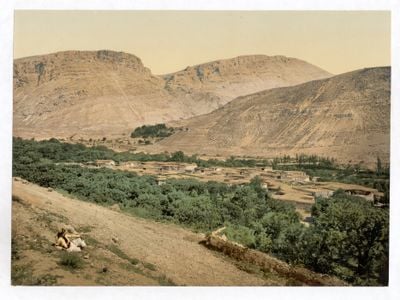
The name Abila comes from the Semitic word for meadow or green growth, fitting its setting near the Ain Quweilbeh spring among olive groves and wheat fields. The south hill, Umm al-Amad, means "Mother of the Columns." Local tradition links the site to the prophet Elijah, and the modern village of Hartha keeps its Aramaic name meaning camp.
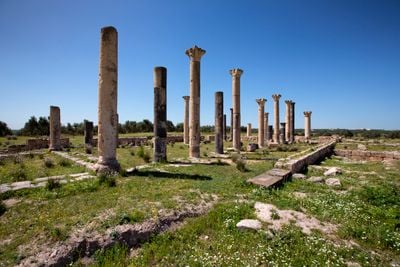
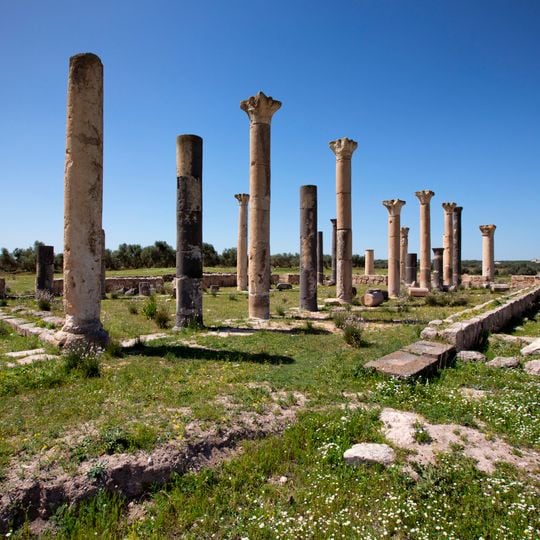
The site occupies two tells, Tell al-Abila and Khirbet Tell Umm al-Amad, on the left bank of Wadi Qweilibeh, with the walled city running across the saddle between them. The south hill, Umm al-Amad ("Mother of the Columns"), holds the standing columns. Ground is uneven and much of the ruins lie unexcavated at the surface, so allow time to walk between the two hills.
The south hill of the site is called Umm al-Amad, "Mother of the Columns", after the large columns still standing there. The first European to visit was Ulrich Jasper Seetzen in 1806; Guy Le Strange described the ruins in print by 1889, and excavations have continued since 1980.
The community of curious travelers
AroundUs brings together thousands of curated places, local tips, and hidden gems, enriched daily by 93,111 contributors worldwide.