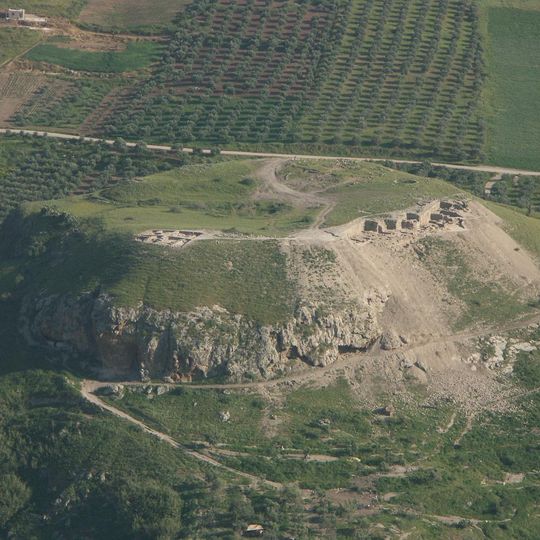
Tall Zira'a, Archaeological tell in Wadi al-Arab, Irbid Governorate, Jordan
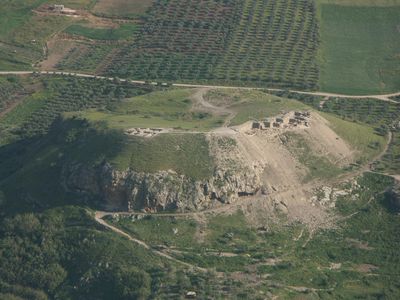
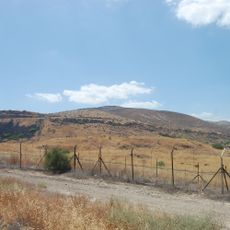
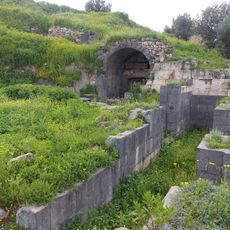
Tall Zira'a is an almost circular tell about 240 m across at its base and 160 m on its flat plateau, rising 22–45 m above the Wadi el-'Arab. A band of pale rock cliffs rings much of the summit, where low rectangular wall foundations lie on the grass. The south flank offers a 150 m ascending track from west to east.
Gottlieb Schumacher first described the tell and its spring in 1885, and Nelson Glueck visited in 1942. Excavations by the Biblical Archaeological Institute Wuppertal began in 2003 under Dieter Vieweger, after a 2001 survey divided the surface into 127 squares. The site was closed military ground after 1967 and only reopened following the 1994 Jordan–Israel peace treaty.
The name Tall Zira'a comes from zara'a, to sow or cultivate, since the hill was farmed until excavations began. Bedouin families who traditionally camp at its foot still graze sheep and goats on the plateau in spring. Among the finds are 28 cylinder seals, a silver pendant, scarabs and beads from a Late Bronze Age building.
The south flank offers the easiest ascent, a 150-metre track climbing west to east over the 22–25 m height difference; the east and north sides are sheer rock. The plateau is reached on foot only. The tell lies about 20 km northwest of Irbid and 4.5 km southwest of Gadara, near the Wadi el-'Arab and Wadi az-Zahar confluence.
The spring in the centre of the hill is fed by a natural siphon: groundwater from the higher hills beyond is carried down beneath the base and up through the middle of the tell, as Nelson Glueck described after his 1942 visit. Excessive pumping by the owners of the surrounding olive plantations has made it dry up rapidly in recent years.
The community of curious travelers
AroundUs brings together thousands of curated places, local tips, and hidden gems, enriched daily by 93,107 contributors worldwide.