Iwa Shrine, Shinto shrine in Ichinomiya-chō Sugyōme, Shisō, Hyōgo Prefecture, Japan
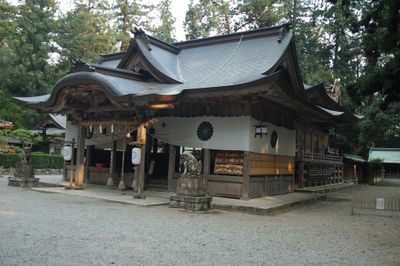
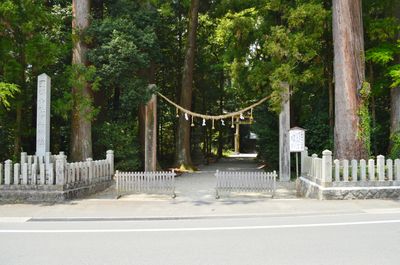
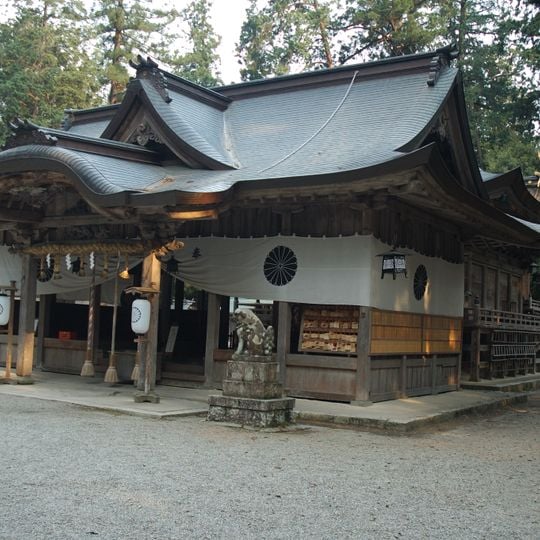
Iwa Shrine stands at the end of a short gravel approach in the Ichinomiya neighborhood of Shisō, Hyōgo Prefecture, facing north into its grove. The dark hip-and-gable roof has a broad front gable carried on dark timber posts, with a natural-wood lattice across the lower facade. A straw rope with zigzag paper streamers hangs between two tall stone pillars, and a white signboard with vertical black characters stands to the right of the path. A stone pedestal before the entrance holds a small carved animal figure.
Tradition dates its founding to the 14th year of Emperor Seimu or the 25th year of Emperor Kinmei. Listed in the Engishiki as Iwa ni imasu Ōnamochi Mitama no kami yashiro, it was granted the senior first rank in 991 and served as ichinomiya of Harima Province. Rebuilt after repeated fires with support from the imperial court, the Akamatsu clan and local lords, it was ranked a Kokuhei Chūsha in 1871.
The shrine's name is explained in the Harima fudoki as coming either from sacred sake (miwa) or from Ōkuninushi's utterance "owa" after finishing building the country. The Ichinomiya place name derives from the shrine's rank as Harima's first shrine. On 26 August the Fūchin-sai, or Abura-mantō-sai, lights small oil-filled dishes across the grounds to pray for calm winds before the 210th day.
The shrine stands along National Route 29 at the 407 Sukuname address in Ichinomiya-chō, Shisō. From Himeji Station take a Shinki Bus bound for Yamazaki, then change to a West Shinki bus for Miyagi, Hara, Yokoyama or Kurakubo and get off at the "Ichinomiya Iwa Jinja" stop. The gravel approach is short and flanked by stone pillars; the white signboard with vertical characters stands to its right.
Behind the honden stands the Tsuru-ishi, the stone on which, by tradition, two white cranes were found sleeping facing north when the shrine was founded; the hall was therefore built facing north, as it still does. The Hitotsuyama Kofun, a burial mound designated a Hyōgo Prefectural Historic Site on 1 April 1971, lies 400 metres to the southeast.
The community of curious travelers
AroundUs brings together thousands of curated places, local tips, and hidden gems, enriched daily by 93,687 contributors worldwide.