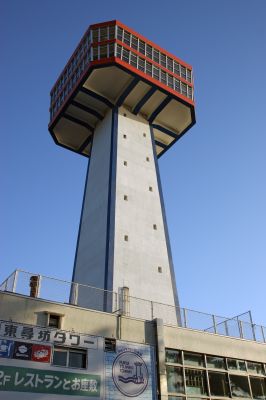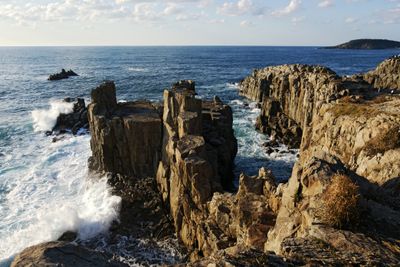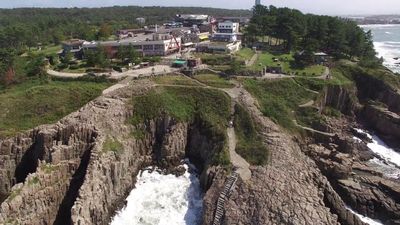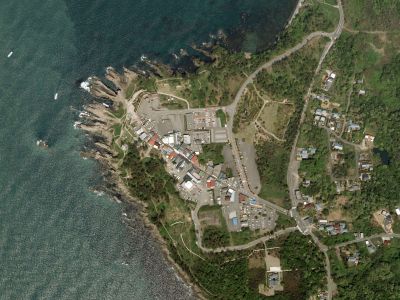
Tōjinbō, Pyroxene andesite columnar-joint cliff in Mikuni, Sakai, Japan
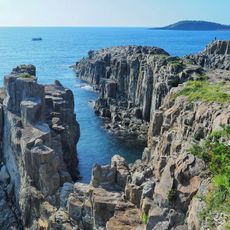
Tōjinbō is a volcanic rock formation along the coast of the Sea of Japan that stretches for one kilometer and rises up to 30 meters above the water. The cliffs display hexagonal and pentagonal columns of pyroxene andesite that drop directly into the sea and stand out through their geometric shapes.
The rocks formed between 12 and 13 million years ago during the Miocene Epoch when volcanic activity created the columnar structures. The Japanese government recognized the site in 1935 as a Natural Monument and Place of Scenic Beauty to honor its geological significance.
The name comes from Tōjinbō, a monk of Heisen-ji in Katsuyama said to have been thrown off the cliff by fellow monks in 1182 after drunkenness and a rivalry over a woman. A memorial service later calmed the storms his ghost was blamed for. The coast also holds named rocks such as Lion Rock, Candle Rock and Ōike.
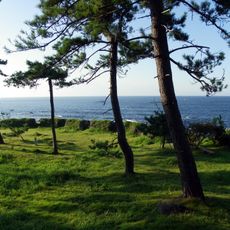
Marked paths along the rocky coastline allow a walk along the formation, while boat tours of about 30 minutes show the columns from the sea. The trails are easy to follow in calm weather, but visitors should take extra care during strong winds and high waves.
A retired police officer named Yukio Shige spends many days at the site approaching visitors and offering them support. His commitment has contributed to a sharp decline in incidents at the rocks and is deeply appreciated by locals.
The community of curious travelers
AroundUs brings together thousands of curated places, local tips, and hidden gems, enriched daily by 92,306 contributors worldwide.