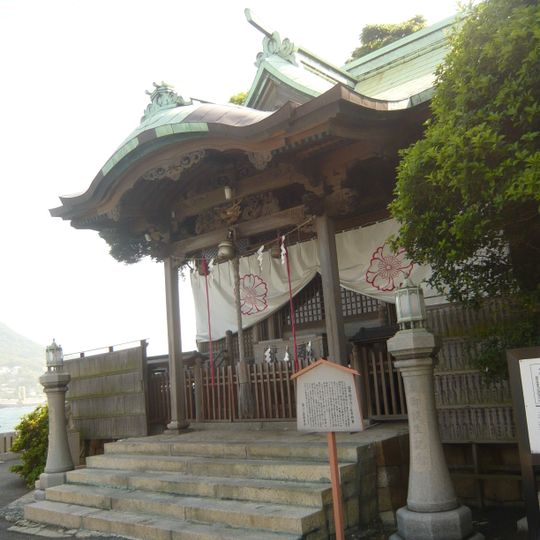
Mekari Shrine, Shinto shrine in Fukuoka Prefecture, Japan
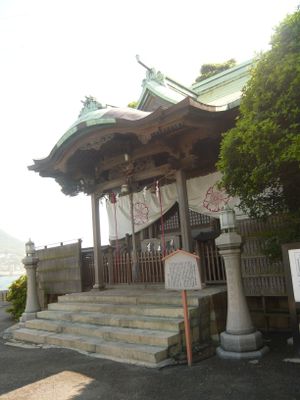
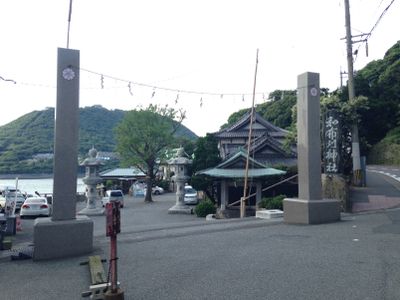
Mekari Shrine is a Shinto shrine in the Mekari district of Moji-ku, Kitakyūshū, at the foot of the Kanmon strait. Its main hall, rebuilt in 1767, has a dark tiled gable roof with layered eaves, reached by stone steps over a stone base. A smaller green-tiled pavilion, two grey stone lanterns and a dark stone stele with vertical Japanese characters stand on the paved grounds.
According to shrine tradition, it was founded in 200 AD by Empress Jingū after her return from the Korean campaign. The present hall was rebuilt in 1767 by Ogasawara Tadatoshi, lord of Kokura. Earlier halls were built or endowed by Ashikaga Takauji in 1336, the Ōuchi and Hōjō families, and Hosokawa Tadaoki in 1620.
The shrine is also called Hayato-sha. Its Mekari Shinji rite, held at dawn on the first day of the old lunar year, has three priests wade into the sea at low tide to cut wakame seaweed and offer it for safe voyages and good catches; it was designated a Fukuoka Prefecture intangible folk cultural property in 1958. A stele on the grounds quotes Matsumoto Seicho's novel The Custom of Time.
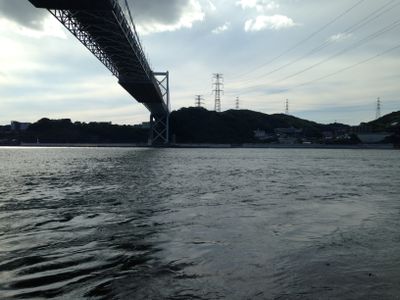
The shrine stands by the Kanmon Strait, next to the Moji-side pedestrian entrance of the Kanmon Road Tunnel. From JR Moji-ko Station, a Nishitetsu bus bound for Mekari takes about 14 minutes to the Mekari-jinja-mae stop, right by the shrine. It is 2.1 km from the Kanmon Bridge Moji-ko interchange and 5 km from the Kyushu Expressway Moji interchange.
The shrine keeps a haiku stone by Takahama Kyoshi, set in 1956 beside the torii of the Hayatomo Inari sub-shrine; he wrote it after visiting Moji in 1941. Near it stands a stele carved with a passage from Matsumoto Seiji's novel "Time's Custom", which uses the Mekari ritual as an alibi device.
The community of curious travelers
AroundUs brings together thousands of curated places, local tips, and hidden gems, enriched daily by 93,458 contributors worldwide.