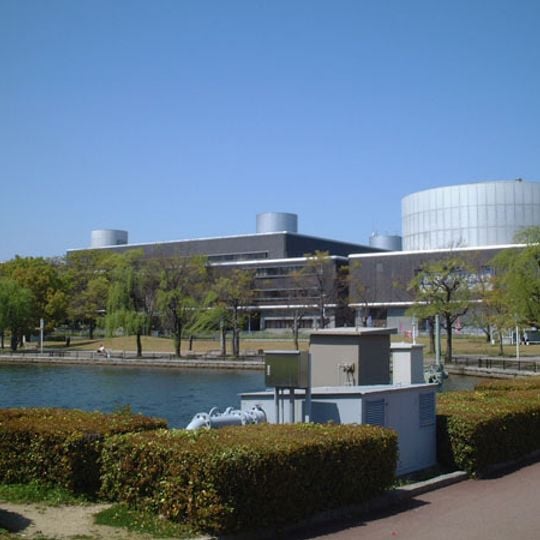
National Museum of Ethnology, Ethnographic museum in Expo '70 Commemorative Park, Suita, Japan
The National Museum of Ethnology is an ethnographic museum within Expo '70 Commemorative Park in Suita, housing artifacts from Asia, Africa, Oceania and the Americas. The collections display tools, clothing, masks and ritual objects from different parts of the world in thematically organized exhibition rooms.
The museum traces its origin to Keizo Shibusawa's Attic Museum, begun in 1921 in the attic of his Tokyo garage and later moved to a purpose-built museum in Hoya in 1937. In 1962 the Japan Ethnological Society donated its specimens to the Ministry of Education, on the promise that they would pass to a national museum if one were created. Objects gathered for the Expo '70 theme pavilion were added, and the museum opened in Suita on 17 November 1977 with Tadao Umesao as first director.
The nickname Minpaku shortens the Japanese name Kokuritsu Minzoku-gaku Hakubutsukan. The museum grew out of Keizo Shibusawa's Attic Museum, begun in 1921 in the attic of his garage in Mita, Tokyo, and its founding collection still bears the name Attic Collection. Two special exhibitions are held each year, in spring and autumn, each running about three months.
Opening hours run from 10:00 to 17:00 with final admission at 16:30, while the building stays closed on Wednesdays and around New Year. The circuit takes between two and four hours depending on interest, as the rooms offer detailed explanations and many objects.
The Videotheque system allows visitors to watch documentary films about ceremonies, performances and everyday scenes from around the world. These films can be selected by region or theme and offer insights into ways of life that objects alone cannot easily capture.
The community of curious travelers
AroundUs brings together thousands of curated places, local tips, and hidden gems, enriched daily by 93,158 contributors worldwide.


