Aso Shrine, Shinto shrine in Aso, Kumamoto Prefecture, Japan
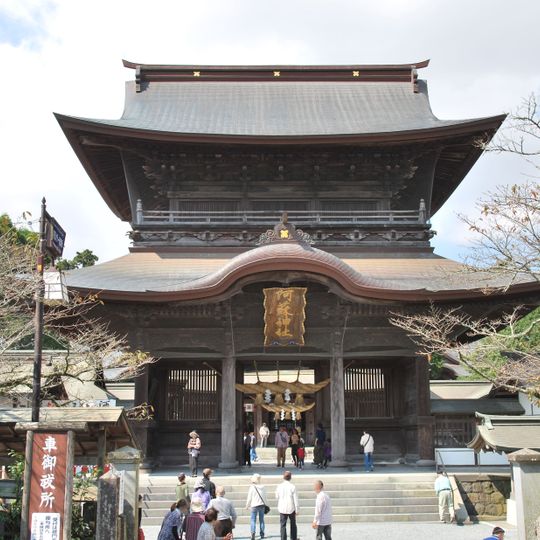
Aso Shrine is a Shinto place of worship in the city of Aso, Kumamoto Prefecture, on the island of Kyushu. The compound includes several wooden buildings, among them a two-story Romon Gate with curved roofs that ranks among the tallest entrance structures at shrines across the country.
Tradition holds that the shrine began in the 9th year of Emperor Korei's reign, when Hayamikatama, son of Kenbanryu, enshrined his parents; the Aso family claims descent from him. The deities received court ranks from 823 onward, and the shrine appears in the 927 Engishiki as a Myojin Taisha. After Toyotomi Hideyoshi confiscated its estates, 300 cho were granted in 1587, and Kato Kiyomasa and the Hosokawa clan funded repairs. The 2016 Kumamoto earthquake destroyed the Romon Gate and Haiden, restored by December 2023.
The shrine's name comes from Mount Aso, and it heads some 450 Aso shrines nationwide. Its main festival, the Onda Matsuri, is held on 28 and 29 July: twelve deities are carried in four portable shrines, and worshippers throw young rice seedlings at the shrine roofs, since more seedlings caught means a better harvest. Women balancing lacquered chests on their heads, called unari, lead the procession.
The shrine is a 1.4 km walk (about 18 minutes) from Miyaji Station on the JR Hohi Line, or a 3-minute walk from the Aso Shrine bus stop. The approach runs east to west, with the tower gate, worship hall and three sanctuaries in a row. The grounds are flat and paved.
The Romon Gate underwent more than seven years of restoration after the earthquake and reopened in December 2023. Craftsmen used traditional techniques to replicate the original Edo-period construction methods.
The community of curious travelers
AroundUs brings together thousands of curated places, local tips, and hidden gems, enriched daily by 92,759 contributors worldwide.