Kushida Shrine, Shinto shrine in Hakata-ku, Japan.
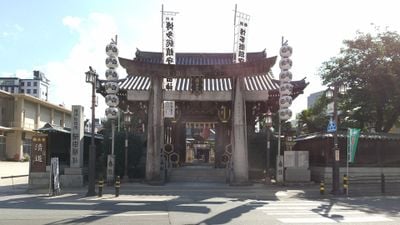
Kushida Shrine is a Shinto compound in Kami-kawabatamachi whose main hall, rebuilt in 1587 under Toyotomi Hideyoshi, stands behind a large stone torii with a dark plaque bearing gold characters. A twisted straw rope with white paper streamers and five lanterns hangs beneath the gable, and a wooden offering box sits between two white lattice stands. A roughly 1,000-year-old ginkgo, the Kushida no Ichō, grows near the entrance.
Founded in 757, when the Kushida Shrine of Matsusaka was divided and its deity Ohata-nushi was brought to Hakata together with Amaterasu. In 941 Ono no Yoshifusa had Susanoo enshrined here after quelling Fujiwara no Sumitomo's revolt. The shrine fell into ruin in the Sengoku period and the present buildings were raised in 1587, when Toyotomi Hideyoshi rebuilt Hakata. It was ranked a prefectural shrine in 1891.
The shrine lends its name to the Hakata Gion Yamakasa, an 800-year-old festival registered by UNESCO in 2016 as intangible cultural heritage. A decorated yamakasa float is kept on display in the grounds year-round, donated by broadcaster KBC, which has aired the drama "Hashire! Yamakasa" since 1960. The May Hakata Matsubayashi procession also sets out from here.
The grounds are open daily without admission charge and lie at 1-41 Kamikawabata-machi. From Nakasu-kawabata subway station, it takes about eight minutes on foot.
A well called Reisen Tsuru stands within the grounds and supplies water that local tradition credits with cleansing and health-giving properties. Some visitors take small amounts home with them.
The community of curious travelers
AroundUs brings together thousands of curated places, local tips, and hidden gems, enriched daily by 93,121 contributors worldwide.