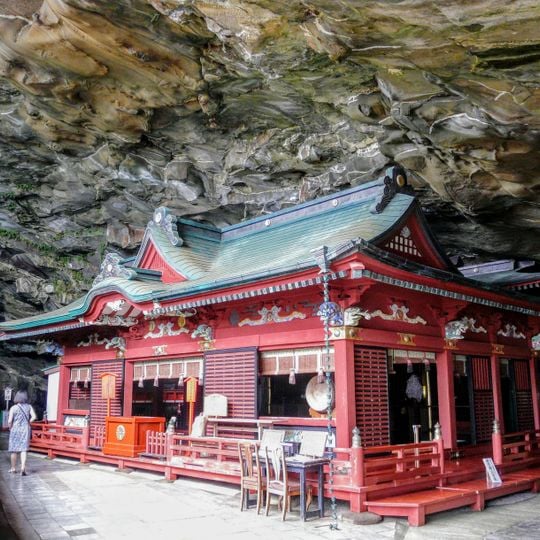
Udo Jingū, Shinto shrine in Nichinan, Japan
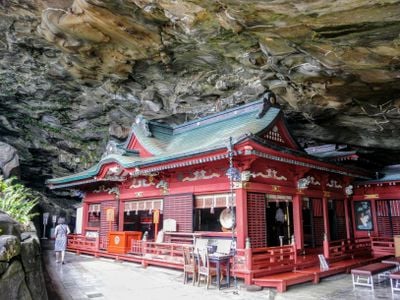
Udo Jingū's main hall stands inside a sea cave 38 m east-west, 29 m north-south and 8.5 m high, reached by stone steps descending the cliff. The red-painted wooden hall has a green metal roof with gold ridge ornaments, two rows of curtained windows, a red-railed veranda, and white dragon and bird reliefs on its beams.
Shrine tradition dates the first enshrinement of six deities to the reign of Emperor Sujin, with the cave hall built under Empress Suiko. In 782 the Tendai monk Kokibo Kaiku rebuilt the hall and founded the betto temple Nio Kokokuji. The present hall was rebuilt in 1711 by Ito Sukezane of Obi and repaired in 1997.
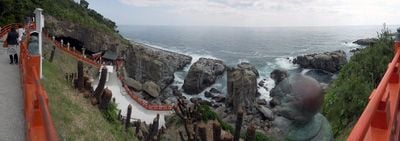
Visitors throw unglazed clay balls called undama, made by pupils of Udo Elementary School since 1954, into a square hollow atop Kameishi, the turtle-shaped rock linked to Toyotamahime. Men throw with the left hand and women with the right; coins were thrown until children were lowered down the cliff to retrieve them.
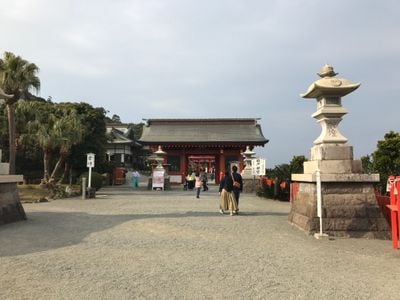
The site is best reached by car from Miyazaki City or by bus from Miyazaki Station. Wear sturdy shoes, as steps and uneven paths lead down to the shrine entrance.
Behind the honden, two breast-shaped bumps on the rock, the Ochichi Iwa, are said to be where Toyotamae nursed her son; water dripping there, Ochichi Mizu, was once boiled into candy as a milk substitute. Near the entrance, the Kameishi rock has a square hollow: men throw clay balls with the left hand, women with the right, and a ball landing inside is said to grant a wish. The balls, made by pupils of Udo Elementary School since 1954, replaced coins that children once scrambled for down the cliff.
The community of curious travelers
AroundUs brings together thousands of curated places, local tips, and hidden gems, enriched daily by 93,163 contributors worldwide.