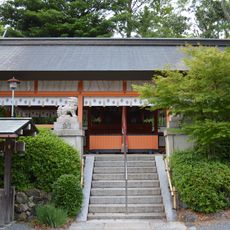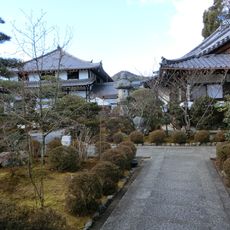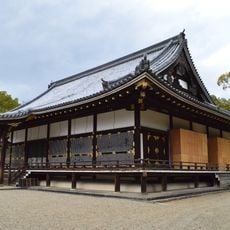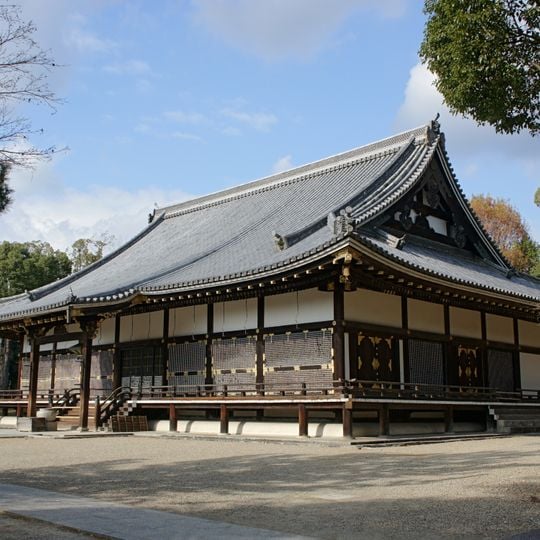
Ninna-ji Temple, Buddhist temple in northwest Kyoto, Japan.
Ninna-ji is the head temple of the Omuro school of Shingon Buddhism in Ukyō Ward, western Kyoto. Its Kondō, the former Shishinden throne hall of the Kyoto Imperial Palace built in 1613 and moved here in the Kan'ei era, keeps lattice shutters and gold fittings; a 36.18 m five-story pagoda rebuilt in 1644 stands nearby.
A ninth-century emperor founded the site, which his son completed a few years later and then led himself as the first monk-priest. Over the centuries the temple remained a place where imperial princes took on religious leadership roles.
The site takes its name from an imperial era and served for centuries as an imperial monastery where princes held the abbacy. This tradition shaped the architecture with wide courtyards and formal buildings that still organize the space today.
The grounds open in the morning and close in the late afternoon, with shorter hours in winter than in summer. Visitors can move freely along the paths and view several buildings from the outside, with some interior spaces accessible for a fee.
The Omuro cherries grow only 2–3 metres tall because the bedrock here is too hard for deep roots; Kyoto people call them "Otafuku-zakura" and compare short, flat-nosed women to them. About 200 double-flowered trees stand in the grove, which is a nationally designated Place of Scenic Beauty.
The community of curious travelers
AroundUs brings together thousands of curated places, local tips, and hidden gems, enriched daily by 93,359 contributors worldwide.