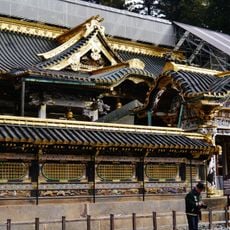
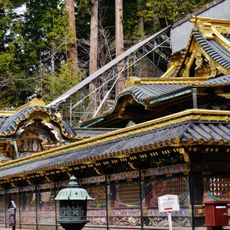
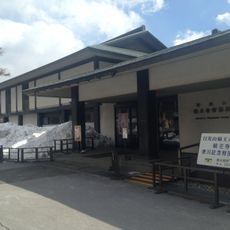
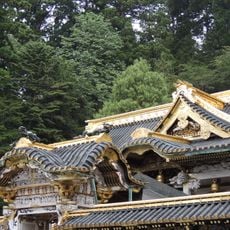
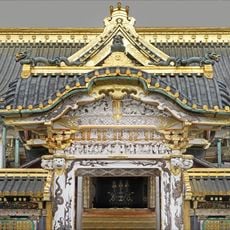
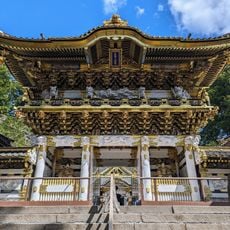
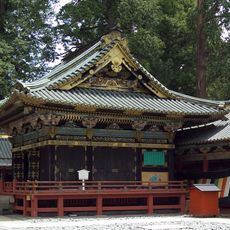
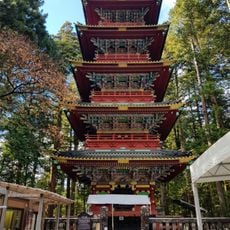
Rinnō-ji Temple, Buddhist temple in Nikko, Japan
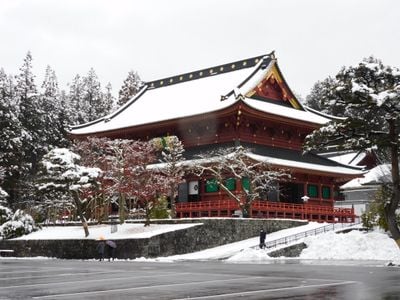
Rinnō-ji is a Tendai Buddhist temple in Nikko, part of the UNESCO World Heritage Site. Its main hall, Sanbutsudō, is the largest wooden building in eastern Japan, measuring 33 m wide, 22 m deep and 26 m high. Inside are three gilded statues of Senju Kannon, Amida and Batō Kannon, each over 7 m tall including its base. The temple also administers the Taiyū-in mausoleum of Tokugawa Iemitsu.
According to temple tradition, the monk Shōdō Shōnin founded the site in 766, and the temple grew into a Tendai base for ascetic training in the Nikkō mountains. The main hall, Sanbutsudō, was rebuilt in 1647 by Tokugawa Iemitsu after snow collapsed it, giving its present size of 33 m wide, 22 m deep and 26 m high. In 1655 the name Rinnō-ji was granted by Emperor Go-Mizunoo, and the hall was moved to its current spot in 1871.
The temple name links Buddhist teachings with the mountains Nantai, Nyoho and Taro, considered sacred places for centuries. Visitors today see pilgrims praying before the golden figures and lighting incense sticks.
The temple opens daily from 8 AM to 5 PM, in winter from November to March only until 4 PM. Visitors should allow time for the garden and wear flat shoes, as the grounds cover several levels and unpaved paths.
The garden Shoyo-en behind the main hall was created in the mid-17th century and reproduces with its central pond the shape of Lake Biwa. The garden design uses trees and stones to symbolize the landscape of Omi Province.
The community of curious travelers
AroundUs brings together thousands of curated places, local tips, and hidden gems, enriched daily by 92,740 contributors worldwide.