Kujūku Islands, Island group in Saikai National Park, Japan
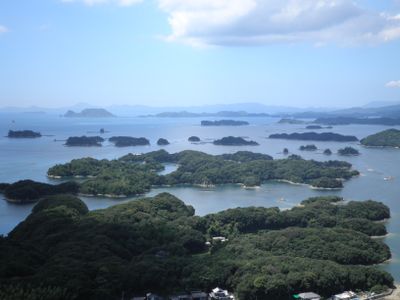
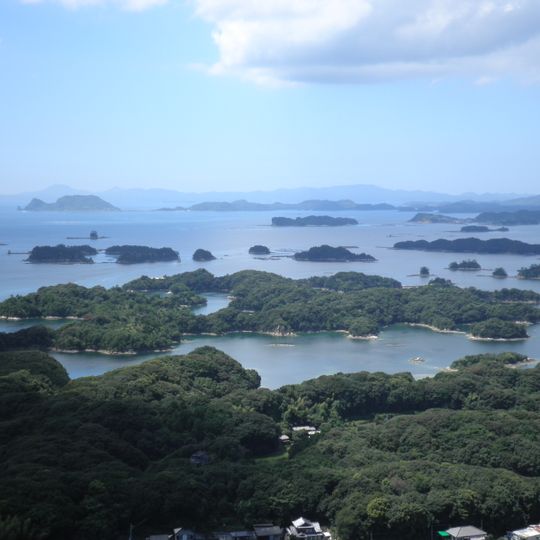
The Kujūku Islands are an archipelago comprising 208 separate landmasses spread along the Nagasaki Prefecture coastline, creating intricate patterns within the surrounding waters. The group lies within Saikai National Park and displays the characteristic ria landscape formed by flooded coastal valleys.
The region gained strategic importance during World War II when Sasebo developed into a major military port with naval installations across the area. After the war, the region shifted toward commercial activity, and the islands eventually became part of Saikai National Park to protect their natural environment.
The islands remain tied to fishing, and visitors often spot traditional boats moving between the smaller landmasses as locals continue this age-old work. This livelihood has shaped life here for generations and remains visible in daily activities.
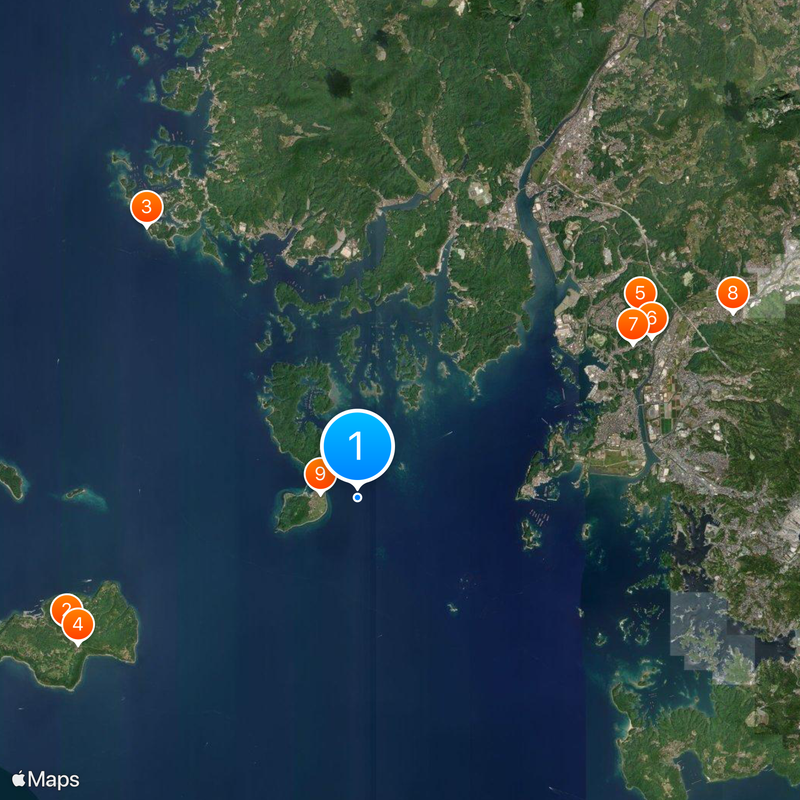
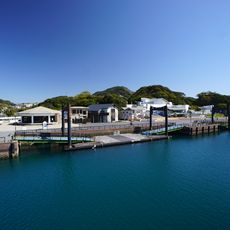
The islands are most easily reached by ferry service from Sasebo City, with boats running regularly throughout the day to connect visitors to the main areas. Arriving early gives you more daylight hours to explore the landscape and take in the different views between islands.
Despite the name Kujūku meaning 99 in Japanese, the archipelago actually contains 208 islands, a gap that dates back hundreds of years. Today only four islands have permanent residents, while the rest remain completely uninhabited.
The community of curious travelers
AroundUs brings together thousands of curated places, local tips, and hidden gems, enriched daily by 91,321 contributors worldwide.