Iimori-jinja, Shinto shrine in Japan
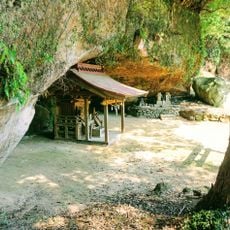
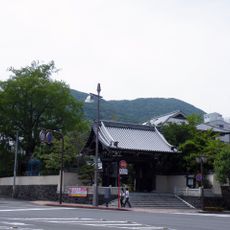
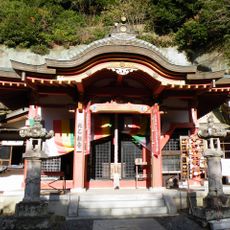
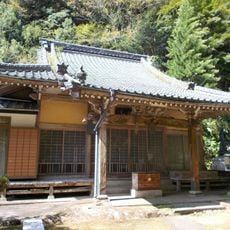
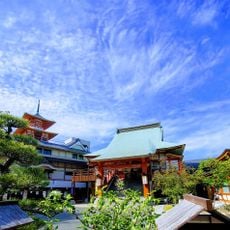
Iimori-jinja is a Shinto shrine in the Ainoura district of western Sasebo, facing south with Mount Atago behind it. Its main hall is built in the nagare-zukuri style, with a roof that slopes continuously forward over the entrance. The hall's plaque lists three shrine names — Iimori, Matsuo and Atago — with Iimori first. Within the grounds stands a subsidiary shrine, Yasukuni Chūreisya, next to which a monument inscribed "Giyū Hōkō" was erected.
The shrine's founding date is unknown; it began as a branch of the Kumano Sanjo Gongen, whose divided spirit was invited here. In 1580 it was moved to its present site and called Iimori Gongen, and the Matsuura clan granted it 3 koku, 2 to and 1 sho of shrine land. In 1871 it took its current name and in 1874 was ranked a gosha, a district shrine.
The shrine serves the Ainoura area and has long been a gathering place where locals seek blessings and good fortune. Visitors rinse their hands at a small fountain before praying and leave offerings, practices rooted in the community's daily spiritual life.
The shrine stands in the Ainoura district of western Sasebo, facing south with Mount Atago behind it. It is a five-minute walk from Kami-Ainoura Station on the Matsuura Railway Nishi-Kyushu Line, and buses also stop at Kimiya-machi and Ainoura Sakaemachi. The annual festival runs from 17 to 19 October.
The shrine's main hall plaque lists three shrine names together, with Iimori at the head: "Iimori Matsuo/Atago/Gion Shrine". The shrine also holds a share of its deity at a small kamidana in the waiting room of Daigaku Station, the next stop from Kami-Ainoura on the Matsuura Railway, placed there to pray for exam success and passenger safety.
The community of curious travelers
AroundUs brings together thousands of curated places, local tips, and hidden gems, enriched daily by 94,456 contributors worldwide.