Fukuishi Kannon, Buddhist temple in Sasebo, Japan
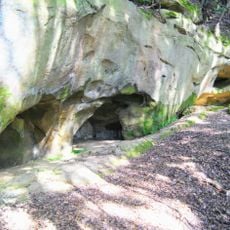
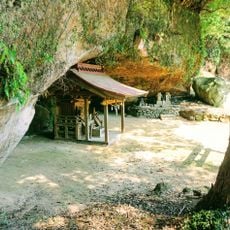
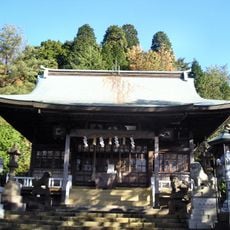
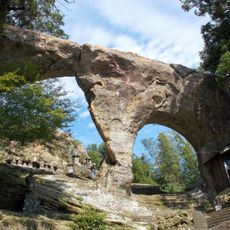
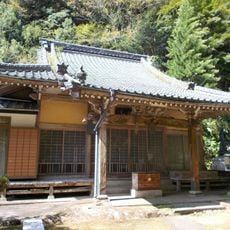
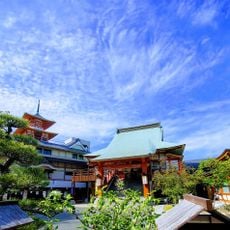
Fukuishi Kannon, formally Seigan-ji, is a Shingon-shū Chizan-ha temple in Sasebo whose main hall was donated in 1785 by Matsuura Seizan, lord of Hirado Domain. Behind the hall, on the north side of Mount Fukuishi, a sandstone cave eroded by water opens about 60 cm wide and 4 m high; it is called Rakan Cave for the arhat statues said to have been placed there.
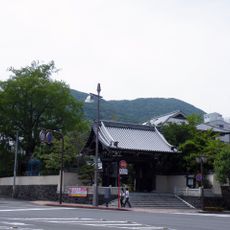
Fukuishi Kannon's official name is Seigan-ji, and tradition dates its founding to the Daidō era (806–810). The present main hall was built in 1785 through a donation from Matsuura Seizan, lord of Hirado Domain. The temple is the 27th stop on the Kyushu Saigoku Thirty-three Kannon pilgrimage.
The temple's popular name comes from the boulder (fukuishi) in its grounds, and its formal name is Seigan-ji. Each year from August 8 to 11 the Sennichi Festival is held, when the hibutsu Eleven-faced Kannon is shown publicly; pilgrims who visit during these days are said to gain the merit of 46,000 days of worship.
The temple stands in Fukuishi-chō, Sasebo; the nearest bus stop is Fukuishi Kannon-mae on the Nishihi and Sasebo bus lines, about one minute on foot. The Sennichi Festival runs from August 8 to 11, when the main image is shown publicly and crowds are largest.
The Rakan Cave is a sandstone hollow about 4 metres high with a mouth of roughly 60 centimetres. Tradition says Kūkai placed 500 arhat statues inside; after losses around World War II, 142 remain. It was once counted among the Hirado Eight Views.
The community of curious travelers
AroundUs brings together thousands of curated places, local tips, and hidden gems, enriched daily by 93,842 contributors worldwide.