Fukui Cave, Rock shelter in Yoshiicho Fukui, Sasebo, Japan
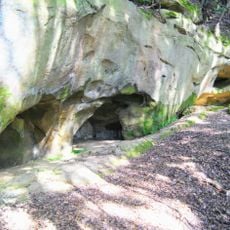
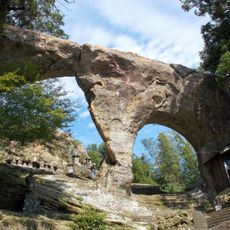
Fukui Cave is a rock shelter near the Fukui River, carved into sandstone cliffs and open to the landscape. The site contains distinct layers built up over thousands of years, holding thousands of objects left behind by people who lived here.
People lived at this location starting 30,000 years ago, leaving traces of their presence across thousands of years. Evidence shows that pottery-making began here around 12,700 years ago, marking a major shift in how people made their tools and vessels.
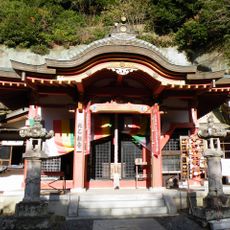
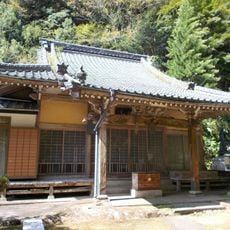
The cave lies within the grounds of an Inari shrine, and the shrine's 1936 construction first exposed Jōmon pottery and arrowheads, which local historian Junichi Matsuse collected. Pottery from layers 2 and 3, about 12,700 years old, was the first Paleolithic pottery excavated in Japan. CT scans found fern fibers kneaded into the clay, and one clay disc and two pierced sandstone discs of unknown use were also unearthed.
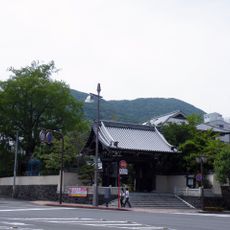
The cave sits in the grounds of an Inari shrine on the left bank of the Fukui River, at the end of a three-minute walk from the Shimo-Fukui bus stop, or a seven-minute drive from Yoshii Station on the Matsuura Railway. Excavated finds are kept at the Fukui Cave Museum. The shelter is 16 meters wide, 6 meters deep and 3 meters high, so the visit is short.
Excavations in 1964 uncovered pottery in layers 2 and 3 that was then the oldest pottery found in Japan, and the first Paleolithic pottery excavated in the country. The finds pushed research into the origins of pottery-making back before the Jōmon period. A CT scan later showed fern fibres kneaded into the clay.
The community of curious travelers
AroundUs brings together thousands of curated places, local tips, and hidden gems, enriched daily by 93,791 contributors worldwide.