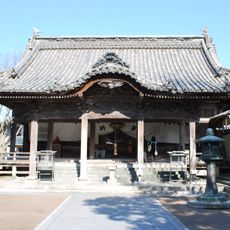
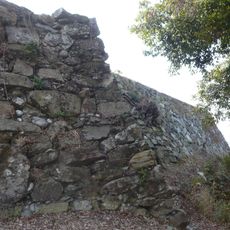
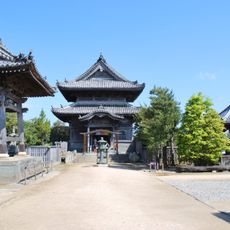
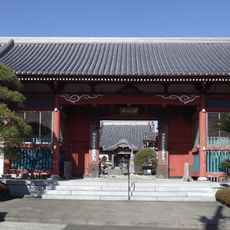
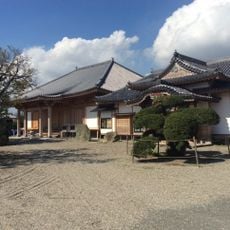
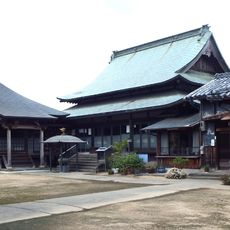
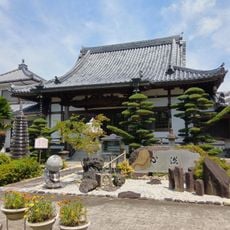
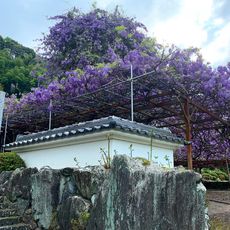
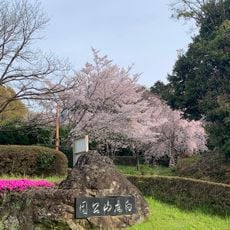
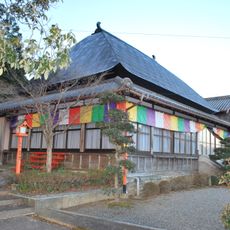
Dōgaku-ji, Buddhist temple in Ishii, Japan.
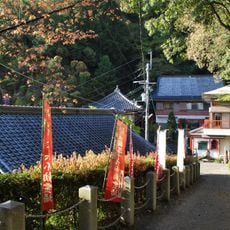
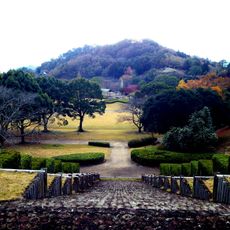
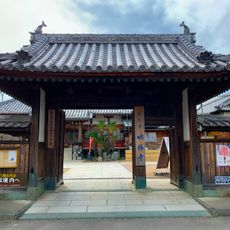
Dōgaku-ji is a Shingon temple of the Zentsū-ji branch in Ishii, Tokushima Prefecture, with the mountain name Tōmeizan and the temple name Ōtani-in. Its main hall, rebuilt after a 2017 fire, now doubles as the Kangi-dō hall, and the Daishi-dō displays a statue of the child Kōbō Daishi. The grounds also hold an 88-temple sandō pilgrimage hall, a Thirty-Three Kannon corridor, and a garden from the Muromachi period.
According to temple tradition recorded in works such as the Awa-shi, the temple was founded in the Asuka period by Gyōki. Kūkai is said to have studied calligraphy and esoteric Buddhism there from age seven to fifteen, and in 815, at forty-two, he returned to arrange the halls and install statues he had carved. The temple burned during the Tenshō era under Chōsokabe Motochika and was rebuilt in the Genroku era by the monk Kanrei.
The temple's name, Dōgaku-ji, comes from Kūkai (Kōbō Daishi) studying calligraphy and esoteric Buddhism there from age seven to fifteen and creating the forty-eight iroha characters. It is known for academic success, and the grounds include an Ofude no Kaji-sui spring, a garden from the Muromachi period, and a haiku stone.
The temple sits about a 30-minute walk from Ishii Station on the JR Shikoku Tokushima Line or is accessible by local bus services. Visitors should wear sturdy shoes since the walking route is hilly and passes through quiet residential areas.
The spring is called O-bude no Kaji-mizu, "brush-water for empowerment". Tradition holds that Kōbō Daishi sought water here for his inkstone; the spring never dries, and drinking it is said to cure illness while using it to grind ink improves one's calligraphy.
The community of curious travelers
AroundUs brings together thousands of curated places, local tips, and hidden gems, enriched daily by 94,405 contributors worldwide.